The 8 C’s of Plotting: Preparation and Problems

This is Part 5 of The 8 C’s of Plotting. Read parts onetwo, and three first, if you please. Click here for the whole series on the 8 C’s. Click the image below to be taken to the General Fiction Feed.

I’m back! This week has been a bit crazy, but here’s Preparation and Problems for you, which is usually the longest section of the book.

After the Complication (C3), the action has started and the adventure has begun. (Or the lovers meet, or the protagonist begins a journey of self awareness. I’m going to go with adventure stories as examples because I know them best.)

Preparation and Problems

This is generally the longest segment of the narrative, when the protagonist makes friends and enemies and learns new skills. In Harry Potter and the Sorcerer’s Stone (or Philosopher’s Stone, for my friends across the pond that got the original HP series), this is where Harry meets Ron, becomes friends with Hermione, is pitted against Snape and Draco, plays Quidditch, plays chess, etc.

If there’s a skill you protagonist needs to know, or if your protagonist needs a certain tool or ally in order to WIN THE STUFF,* then he or she will acquire that during this section.

*You know, defeat the bad guy, get the girl, that sort of thing.

You can throw in some backstory here if you want, or you can be like William Goldman and wait to add all the backstory for secondary characters (Inigo, Fezzik) until the Gloom section. (We’ll get to that next week.)

The Preparation and Problems is also where the Protagonist’s problems will intensify. Think of it as a two steps forward, one step back movement. Those “step backs” are setbacks or confrontations with the/an antagonist. Don’t let your reader forget the antagonist and what is at stake for the protagonist!

Let’s review the Preparation and Problems for The Lion King and The Hunger Games.

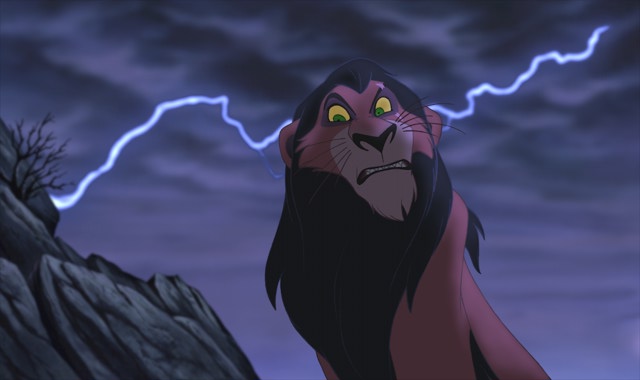
In The Lion King, Simba meets Timon and Pumbaa, he learns Hakuna Matata and grows up into a big strong lion. This is upward movement.

Don’t get too comfy—The camera shoots back to Pride Rock to remind us that there’s still a problem Simba’s going to have to face. This is the first Pinch Point. Highlight between the brackets to see the text, which may contain spoilers: [Zazu and even the Hyenas aren’t happy with the way Scar runs things.].

Here’s what Larry Brooks has to say about Pinch Points:

pinch point allows the antagonistic force of the story roaring onto center stage to announce itself and remind us of its dark intentions and inherent threat to the hero’s quest.  To stick it right into our face so that we may fear and [loathe] that which the hero fears and [loathes].

…Every story has a hero.  Every hero has a journey, a quest, a problem to solve, a need to fulfill.  There are obstacles in the way of that quest, often (usually) embodied in the character of an antagonist, or the bad guy.  A pinch point is when the primary opposition to the hero’s quest comes front and center in the story, showing itself to the hero and to us.

…If the hero is being chased by a bear, the bear will show up at the pinch point.  If the story is about an airplane crashing, something that reminds us we’re about to crash will show up at the pinch point.  If the story is about trying to win back lost love, the pinch point is when the departed lover turns up in the arms of another.

—From “The Help” – Isolating and Understanding the First “Pinch Point”

Then there’s the stargazing scene. Simba thinks about his dad, Rafiki has a realization, and Nala shows up. Can You Feel the Love Tonight?

Now, when I first plotted out The Lion King, I put the love ballad in the slot for “Elation.” Except it isn’t. Nala showing up isn’t the real confrontation. She’s more of a set back in Simba’s plan to forget his past. The real confrontation? We’ll get to that next time.

In The Hunger Games, [The Games begin. Katniss nearly dies of thirst (1), she dodges fireballs and gets burnt (2), she takes refuge in a tree and Haymitch sends her ointment for her burn].

You’ll see that there are two big problems that Katniss has to overcome while trying to stay alive during the Hunger Games. The second one is the pinch point—it’s when we are reminded that The Capitol controls the games. In the movie, the Gamemakers get their own scene.

When you have a pinch point—and there are at least two—you have a choice. You can either have another character remind the protagonist about it (Nala telling Simba what is going on at Pride Rock), or you can actually show it, unfiltered by the protagonist’s eyes (A scene devoted to Scar, showing him doing mean, awful things). The latter is more powerful because the reader will experience it for him or herself.

Depending on the length of your book, I’d shoot for two pinch points BEFORE the Confrontation. One can be direct, and one can be indirect. The rest of the time, you can move the plot along by throwing in other obstacles, like general problems or minor antagonists.

Next time we will be talking about the Confrontation, Elation, and Collapse, and we will relate them to the 3-Act Structure’s Midpoint. I can’t make any promises, but I think I’ll publish another post about the 8 C’s before next Friday, since this post was late.Stay tuned, and Write Now!

The 8 C’s of Plotting: Reaction and Complication

This is Part 4 of The 8 C’s of Plotting. Read parts one and two first, if you please. Click here for the whole series on the 8 C’s. Click the image below to be taken to the General Fiction Feed.

With the Prologue, Opening, Captivation, and Change we discussed last time, the Reaction and Complication flesh out the rest of Act One, if you are familiar with the 3-Act structure.

I told you that I’d start using The Lion King and The Hunger Games as examples to illustrate. To get you up to speed, here are the Prologue, Opening, Captivation, and Change for each. I’m not hiding these, because even if you haven’t seen either, this information is pretty standardly given in a movie trailer.

The Lion King

Prologue—The Circle of Life, Simba introduced

Captivation—Lions! In Africa! Great Soundtrack!

Opening—Simba Just Can’t Wait to Be King

Change/Inciting Incident—Elephant Graveyard; Scar makes a plan to become king

The Hunger Games

Prologue (Movie)—Panem, District 12

Captivation (book)—It’s the Reaping. What’s the Reaping?

Opening—The Reaping

Change/Inciting Incident—Katniss’ sister is chosen as tribute in the 74th Hunger Games. Katniss volunteers in her place.

Up to speed? Here’s the Reaction and Complication. They don’t need very long descriptions.

Reaction

The reaction is anything that happens after the Change. How does the protagonist (and/or the antagonist) react to the change?

In The Fugitive, Dr. Richard Kimble (Harrison Ford) is convicted of killing his wife, though we are pretty sure he didn’t do it. The conviction is the change. The reaction? He is sent to be executed.

In The Lion King, (highlight the area between brackets to read the spoiler) [Simba still trusts his uncle Scar, so he willingly, naively, sits at the bottom of a canyon waiting for his dad, not knowing that Scar intends to trample him with a stampede of wildebeests.]

In The Hunger Games, [Katniss and Peeta go to the Capitol and train. Katniss isn’t very cooperative (or likable) as far as Haymitch is concerned. This includes the parade, the training, and the arrow through the apple.]

The reaction can play out in different ways, but whatever the Protagonist does during the “reaction” stage, he or she will do something else after the complication.

Before or during the Complication, it’s a good idea to show what the antagonist is doing.

Complication/Campaign

This is whatever happens to make the protagonist stop reacting (likely due to a “complication” or obstacle of some sort), and start acting (setting upon a “campaign”).

It can be a switch from passive to active, like in The Lion King.

Or it can mean a change of direction or a different approach, like in The Hunger Games.

It might also be the entrance into a new world or setting, like in the monomyth.

In a character-driven story like Toy Story, the complication:

  • is a bad decision, mistake, or accident
  • which grows out of the Reaction
  • and ends unfortunately,
  • resulting in the need to make new plans—the “campaign” of Act Two.

—”Act One: Threatened Characters Make Mistakes

The Complication corresponds with the 3-Act structure’s First Plot Point or the End of Act One and is often a MAJOR SCENE. Major scenes have their own beginning, middle, and end.

In The Fugitive, Kimble is riding the bus, on his way to be executed. His fellow convicts plan an escape, but that backfires. A guard gets shot. Kimble, a doctor, is unchained to help the guard. The bus crashes. It crashes on a train track. The train is coming. Kimble has to escape from the train. Once he escapes from the train, a fellow convict frees him. Now he’s free…a fugitive on the run. And because he’s a fugitive, the US Marshalls get put on the case. This introduces Gerard, the antagonist and in some ways, a secondary protagonist.

In The Lion King, [Scar kills Mufasa and blames Simba, Simba runs away.]

In The Hunger Games, [Peeta declares his love for Katniss during the interview. She freaks out, but Haymitch teaches her that she needs to play up the audience to get sponsors]

complication

(See my deconstruction of Toy Story’s Act One and how it relates to the story’s theme.)

Any questions? Ask below. Just don’t include spoilers. If you disagree with my assignments of plot points, all the power to you, as long as you are thinking critically.

Next week I will devote the entire post to the Preparation and Problems segment, which nearly always takes up the longest chunk of narrative, and is what Blake Snyder calls “Fun and Games.”

Kindle Touch versus Nook Simple Touch

UPDATE: This is a review comparing the Nook Simple Touch to the Kindle Touch. These models have both been replaced by newer models. And while I still prefer brick & mortar stores to Amazon, after struggling with my Nook’s clunky highlighting and note-taking issues, I’d recommend just going with the free Kindle app on mobile devices, or sticking with physical books if you don’t want to read back-lit text.

Next week is my birthday, and though I have thought about getting an E-reader for a few years now, I am finally getting one.

Why the delay?

1. I like physical books. No e-reader will ever compare to snuggling up with a book, turning its pages, holding the weight in your hand, seeing the typography printed on paper and laid out with intention. And no e-reader will ever have that deliciously musty smell of a book.

2. I wanted a touch screen, no backlight e-reader if I was going to get one at all. I have an iPhone with both Nook and Kindle apps if I need a backlight, but the truth is, I stare at a screen all day. I’d prefer reading to be better for my eyes, not more strain for them.

3. I wasn’t reading enough to justify the purchase.

4. I thought going to the library would suffice when I finally finished the books I was reading.

5. Buying used books is cheaper than buying an e-book.

Why the change of heart?

1. I’ll still buy physical books.

2. No backlight E-readers with full touch screens are available.

3. I’ll read more if I have access to more books.

4. The local library here has very little selection. When we move to the city, I’ll use the library more, but I can get e-books from the library, too.

5. Buying new books supports the publisher, which means more books in the future.

Kindle Vs. Nook

Big surprise! The Kindle Touch and Nook Simple Touch have more similarities than differences. To read about the similarities and a few differences, read this article at the MSNBC Technolog, or click the image below.

The Nook and Kindle homepage layouts
John Brecher / msnbc.com

Kindle Touch Review

I went to two stores with Kindle Touch samples, Walmart and Best Buy. Unfortunately, the demo version used at both stores SUCKS, so if you want to try out a Kindle Touch, find a friend who has one and try theirs, or find a nice Best Buy person willing to register the sample in his name so you can bypass the demo. The latter happened for me. Still, it felt a bit clunky, so finding a friend seems the better option.

Here’s the overview of a Kindle Touch:

  • One free book to borrow per month if a Prime member ($80 annually) NOW $99 annually
  • $30 more to get one without ads
  • 3G available for $50 more
  • Can view web browser
  • text-to-speech option
  • 4 GB storage plus cloud capabilities
  • can read PDF, TXT, and Word documents, no e-pub
  • turn page by tapping sides of screen
  • Reading Options:
    • Options accessed by tapping top of screen (I accidentally accessed it a few times while turning pages)
    • 8 text sizes
    • 1 typeface with 3 font options (serif, sans, condensed)
    • 3 choices for line spacing
    • Words per line: fewer, fewest, default
  • not easiest to navigate (demo version impossible)
Because I used a demo version, my experience was limited.

Nook Simple Touch Review

  • 1 hour free reading in-store, every day, of e-books you haven’t purchased. A select e-book is free every Friday
  • no ads
  • 3G not available
  • no text-to-speech
  • no web browser access
  • 2 GB storage plus cloud capabilities plus SD card slot for unlimited storage.
  • can read PDF, e-Pub, and image files, not Word or TXT docs
  • turn page by tapping sides of screen OR use buttons on edges
  • Customizable sleep screens—create your own with personal photos
  • Reading Options:
    • Options accessed by tapping bottom of screen
    • 7 text sizes
    • 6 different typefaces (I think Amasis is the name of my favorite)
    • 3 choices for line spacing
    • 3 choices for margins
    • publisher default option
  • better navigation and interface
Kindle has some features that the Nook doesn’t have, but the Nook has a better design. Kindle has better Amazon phone support with a return policy, but Nooks can be serviced in any B&N store.
I still couldn’t decide between Kindle and Nook, so I looked at the stores:

Amazon versus Barnes and Noble

Though Barnes & Noble claims to have 2 million books available, that counts the free books, which Amazon also has. Amazon actually offers more books, but the difference is small, and those books offered on Amazon and not on B&N are more likely to be self-published books.

The decision-maker was which store had a better relationship with publishers. The answer? Barnes and Noble. (Read the New York Times article here.) Amazon might have cheaper books from time to time, but Barnes & Noble respects the publisher’s wishes. It might lead to some grumbling from cheapskate consumers like myself, but think about the price for a second here: by paying the publisher’s price, you are keeping the publisher alive. By keeping the publisher alive, you are keeping traditional publishing alive. By keeping traditional publishing alive, you are keeping book printing and quality control alive.

Now, I’m biased. As a designer, I’ll always prefer printed books to e-books because they are intentionally designed with intentional typefaces. As a tactile person, I’ll always prefer printed books. As a writer, I prefer traditional printing because traditional publishers 1) don’t publish as much crap and 2) get writers seen and their books read.

Do I have respect for people that can do self-publishing? Yeah, because it’s a lot of work. Do publishers sometimes reject awesome books? Yes—try a different publisher or find a better agent. Can publishers get greedy? Yes–go to the library if the book is too expensive.

But really, publishing is an industry, full of workers. Workers who deserve to be paid. It makes me SO MAD when I see people saying that “reading should be free for everyone.” One: It is, you idiots. Get a library card. Two: how would you feel if YOU didn’t get paid for your job?

Bottom Line

While the Kindle is easily the number one sold e-reader, popularity doesn’t necessarily mean superiority. Then again, I’m a Mac person, so of course I feel that way. Except in this case, the Nook is actually the cheaper option.

Nook isn’t called the “Simple” Touch for nothing. It has fewer gimmicks extras, and it’s much easier to use. The design is far superior, and I am supporting traditional book publishing by supporting Barnes & Noble.

Nook wins.

Update April 2012: Nook just released the NOOK Simple Touch™ with GlowLight™—SUPER long name, super cool gadget if you want to read at night. $139, same price as the Kindle without ads. Check out a review here. Preorder it here.

Introduction to Poetry

Well, now I feel sheepish. I completely forgot that April was National Poetry Month until I was in Seattle and saw posters about it. To make it up to you, I’m going to introduce you to my favorite poets.

I’ll divide them into the categories I read most and give you a link to one of their most well-known poems. I won’t type their poems here because that would be plagiarism.

Taste a sample, and if you like it, check out their books of poetry. Every bookshelf could house more poetry.

Contemporary

These poets are still living.

Ada Limón I just ADORE. Start with “How to Triumph Like a Girl” and “Dead Stars.”

Billy Collins was my favorite poet in college. He’s hilarious and masters visuals in an incredibly fun way. His popular poem “Introduction to Poetry” is appropriate for this post, and  you can read it here.

Li-Young Lee is more serious, lyrical. He’s known for “Persimmons,” which is read in most poetry classes, and for good reason. Read (or reread) it here. I also recommend “The Gift” and “Dreaming of Hair.”

For 180 contemporary (1980s-current) poems chosen by somebody at The Library of Congress for American High Schoolers, go here. Don’t expect much diversity there.

Harlem Renaissance

I love Harlem Renaissance poetry. What Jazz did to loosen and free music, Harlem poets did to poetry. Their rhythm is unmistakable. Please, don’t only read what dead white guys have written.

Langston Hughes is probably a familiar name. Read “The Negro Speaks of Rivers” here.

Gwendolyn Brooks might be less familiar, but she is my favorite woman-poet. I think “The Bean Eaters” is her most well-known poem, but be sure to read a bigger sampling of her poems. Some are listed in a little blue box on the right column of her biography here. Also, if I could have a writer’s portrait half as cool as hers, I’d be very pleased.

Classics

There are SO MANY (it’s all we read in K-12). I’ll just let you read two of my favorite pre-20th century poems:

“Annabel Lee” by Edgar Allan Poe. If Poe’s fiction is overrated, his poetry is seriously underrated. This is a master of form.

“She Walks in Beauty” by George Byron. This is just such a lovely poem.

Like I said, there are so many more! But that’s why I have a poetry section on this blog. I’ll keep adding to it 🙂 In the meantime, here’s a bunch of recommendations from poets themselves.