[Historical Fiction] Friday

Historical Fiction

I can’t believe that NaNoWriMo is less than a week away! I’ve been trying to prep by doing research, since my novel is set mostly in an alternate 12th century England (I know…I know). My intention was to be historically accurate—as much as possible. But when I started researching castles, I realized that my mental image was going to have to change in some respects. For example, here’s a rough idea of what I was picturing:

But Alas, Conwy Castle was begun in the 13th century. One hundred years later. Keep reading to see a progression showing how difficult it is to date a castle, and how people really have almost no idea what castles looked like in the 12th century.

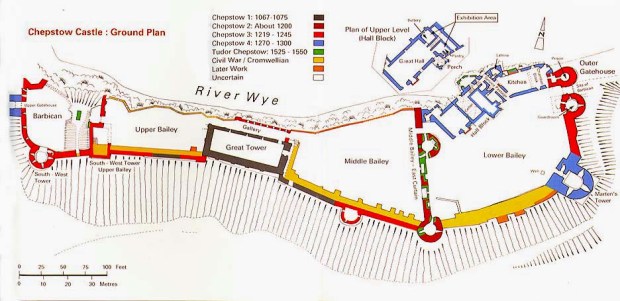
Here’s a floor plan of Chepstow Castle, showing how many renovations the castle received over a few hundred years.

Here’s a model of what the castle looked like in the 1500s, during the Tudor time period which followed the Middle Ages.

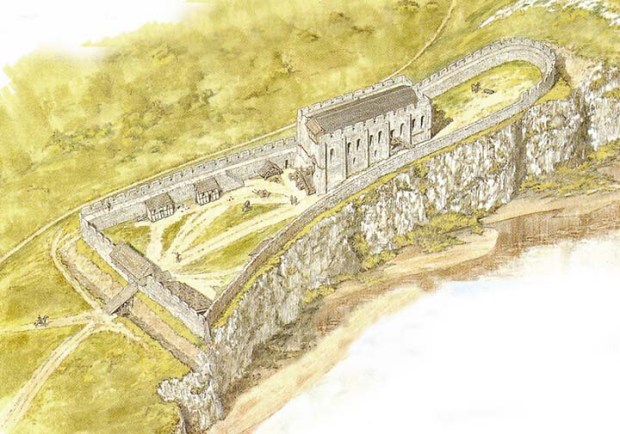
And here’s what it looked like roughly around the 12th century.

Exciting, right? A stone “tower” that looks sort of like a prison building, with a couple wooden huts outside? Okay, I exaggerate a bit. But seeing this castle made me go, Eeesh, not what I was expecting, for my heroine who will be living in something like this.

But then to complicate things further, you are not only supposed to get the time period right, but you should also get the class distinction right. Thankfully—as far as I can tell—Chepstow, as lovely as it is, is a fairly modest castle compared to others built in the 12th century. A King’s castle would be more luxurious. Kings’ castles usually get refurbished and rebuilt more often that other castles, though, which is why many (if not most) of the castle ruins in the UK are remnants of much more contemporary designs.

I’ll tell you that I DID find a castle that will and does inspire me and is from the correct time period, and belongs within the correct financial ranking. But all of this research led me to have a discussion with one of my writer friends, and I’d like to hear your input on it, too. Yes, even if you read this post a few years down the line. I’m curious to what you think! And I’ll probably still be working on the novel then, anyway.

How important is historical accuracy in a novel? Would you rather read a novel that 1) gets its history right or 2) tweaks the facts for the sake of their story?

I recently read Christy English’s The Queen’s Pawn. I don’t recommend it. The whole premise of the book was an inaccuracy, but it turns out, finding historical inaccuracies was the only entertainment I squeezed out of the reading. My conclusion is that if you are going to get history completely wrong, you had better write an engaging story so that I the reader will forgive you. I haven’t forgiven Christy English, because the story was not interesting to me. Rewriting history just so you can write about a middle-aged man fornicating with a pubescent teenager is not my idea of worthwhile literature. Lolita it wasn’t.

Ahem. Anyway, your thoughts on historical accuracy?

Fiction Friday: Newbery Medal Winners in Fiction, 1980-2012

Yes! A day in advance! Again!

You know how I mentioned earlier this week that I started a book club reading and rereading Newbery Award Winners? Well, in preparation for the first meeting, I really wanted a poster of the Newbery Award Winners. And I thought it would be even more nice to have a super short description of the book, to jog our minds if we have already read it, or to make us interested in books we maybe never heard of.

Well, those posters they have in libraries are apparently only available to libraries. I tried to make an account as a homeschool—no dice.

Those nice pretty posters also don’t have a blurb about the books. They have the book name, author, date, and cover. I don’t judge a book by its cover, but I do judge a book by its title. Let’s just say The View from Saturday sounded like a kid version of Divine Secrets of the Ya-Ya Sisterhood, and why read Sarah, Plain and Tall when you can read something like Julie of the Wolves?

I remember really liking Sarah, Plain and Tall. I don’t remember it being about a mail-order bride.

So I made my own posters. And since I love you all dearly, I’m going to share them with you to download, for free. (Note, the link to download the printable version is near the end of the post)

This is a preview image. Click the link at the bottom of the page to download.

I have to admit, though, that I have a couple of confessions to make. 1) I am no longer any good at math. The Newbery Award gave its first medal in 1922. This year is 2012. That means there are 90 books, right? 2012-1922=90. No, there are 91 books. If you just subtract, you aren’t counting the current year. Problem: my layout was 30 books per page. In lieu of creating a new layout (this was my 3rd or 4th), I decided rather to eliminate from my posters the books that were biographies and the books that were collections of poems. While I might be interested in someday reading A Visit to William Blake’s Inn: Poems for Innocent and Experienced Travelers (1989), I can honestly say that I have no desire to pick up Joyful Noise: Poems for Two Voices (1982) after hearing that all of the poems are about insects.

Confession 2) I haven’t read most of these books. Some of them I hadn’t even ever heard of. I think I read mostly Newbery Honors books as a child, with some major exceptions, like The GiverNumber the Stars, and A Wrinkle in Time. So when I went about writing blurbs about the books, I had to read the synopses of the novels from sites like Amazon and Goodreads. I could only fit about 100 characters per novel to keep the posters to a page each. That’s less than a Tweet, and is about 20 words. Try summarizing a book you’ve never read into 20 words or fewer sometime—it’s definitely a head-scratcher.

As much as I enjoyed the challenge (and hope it will help me come up with elevator speeches of my own novels in the future), it is very time-consuming. That’s why I’m going to release one page per week.

So, for today, I give you the Newbery Medal Winners 1980-2012.

A couple other notes:

  • The boxes by the cover images include the date of the award and serve as a check box, so you can keep track of which ones you’ve read.
  • Since I haven’t read some of these books, the blurb may not be the best representation of the novel.
  • I haven’t printed this out myself yet. If the images are a bit fuzzy, it’s because I couldn’t find high-res images of the covers.
  • This is for educational or personal use only. You MAY NOT use these posters for any sort of commercial gain.

See you next week!

Favorite Passage in Literature

“There are books that are so alive that you’re always afraid that while you weren’t reading, the book has gone and changed, has shifted like a river; while you went on living, it went on living too, and like a river moved on and moved away. No one has stepped twice into the same river. But did anyone ever step twice into the same book?” —Marina Tsvetaeva

I’m going to go ahead and let my nerd flag fly as I share my favorite passage in all of literature.

Backstory that you may feel free to skip over

In high school, I became a die-hard Lord of the Rings fan. Not so die-hard that I could speak Elvish fluently, but enough that I could beat the pants off anyone playing LOTR Trivial Pursuit. As I left for college to become a literature and writing major, I was overwhelmed with assigned reading. For the first time in years, I didn’t read the Lord of the Rings trilogy that summer (It gets better with every reading, I’ll have you know. I know the first run can be a bit rough—plenty of exposition that Tolkien fellow writes). I also didn’t want to be defined by my hard core geekiness. College was a new start, and a way for me to leave behind the high school angst and discover who I really was.

Over the last few years, I’d still cry at the credit music of The Return of the King, and the trailers for the movies still gave me goosebumps, but I haven’t picked up the books in nearly a decade. The literature major lasted only a couple of semesters before I despised my assigned reading. I soon dropped the Lit major and focused on writing. Sure, I still had stacks of reading material, but I was reading Billy Collins and Li-Young Lee and Aristotle instead of the monotonous feminist drivel that I had previously been beaten over the head with. You’ve read one feminist awakening novel, you’ve read them all. Trust me. (I much prefer feminist characters or themes in a book that isn’t just about feminism. Any book with rounded, realistic female characters is a feminist novel, IMHO.)

Now I’m the one writing too much expository. Anyway, since I’ve graduated, I’ve been able to coddle my love for reading and nurse it back to health. Yesterday I finished The Graveyard Book by Neil Gaiman and read his Newbery Award acceptance speech, in which he wrote about the unadulterated love for books that he had as a youth. Today, I stumbled upon some Tolkien quotes, and as I was rereading the passage below—many years ago underlined and circled and starred in my first, now tattered paperback copy—I realized what a profound impact these words had on me as a teenager.

The novel version

(Frodo) “I don’t like anything here at all, step or stone, breath or bone. Earth, air and water all seem accursed. But so our path is laid.”
(Sam) “Yes, that’s so. And we shouldn’t be here at all, if we’d known more about it before we started. But I suppose it’s often that way. The brave things in the old tales and songs, Mr. Frodo: adventures, as I used to call them. I used to think that they were things the wonderful folk of the stories went out and looked for, because they wanted them, because they were exciting and life was a bit dull, a kind of a sport, as you might say.
“But that’s not the way of it with the tales that really mattered, or the ones that stay in the mind. Folk seem to have been just landed in them, usually—their paths were laid that way, as you put it. But I expect they had lots of chances, like us, of turning back, only they didn’t. And if they had, we shouldn’t know, because they’d have been forgotten. We hear about those as just went on—and not all to a good end, mind you; at least not to what folk inside a story and not outside it call a good end. You know, coming home, and finding things all right, though not quite the same—like old Mr. Bilbo. But those aren’t always the best tales to hear, though they may be the best tales to get landed in! I wonder what sort of a tale we’ve fallen into?” [Book IV, chapter 8]

The movie version

“I can’t do this, Sam.”
“I know. It’s all wrong. By rights we shouldn’t even be here. But we are. It’s like in the great stories, Mr. Frodo. The ones that really mattered. Full of darkness and danger, they were. And sometimes you didn’t want to know the end. Because how could the end be happy? How could the world go back to the way it was when so much bad had happened? But in the end, it’s only a passing thing, this shadow. Even darkness must pass. A new day will come. And when the sun shines it will shine out the clearer. Those were the stories that stayed with you. That meant something, even if you were too small to understand why. But I think, Mr. Frodo, I do understand. I know now. Folk in those stories had lots of chances of turning back, only they didn’t. They kept going. Because they were holding on to something.”
“What are we holding onto, Sam?”
“That there’s some good in this world, Mr. Frodo… and it’s worth fighting for.”

Reflection

The scene in the movie is a tender one, but even though it is rendered verbatim, as far as I can remember, it doesn’t come close to the impact I get from reading the dialogue. Reading lets my mind absorb the words and mull over them in a way that listening doesn’t. When I read these words today, I realized that this passage had—pardon the cliche—changed my life, or at least reflected the change that was already taking place. Like most American teenagers, I was moody and hard-hearted and pessimistic about the future. As I matured, I became more of an optimistic realist. Sure, things might be crappy, but they aren’t all that bad. Could be worse. Now I try to see the positive in everything. I hold on to the promise that things will get better if I just keep fighting. This belief has gotten me through many shadows—heartaches, losses, failures. Did this passage in The Two Towers eloquently state what I was already understanding, or did Tolkien’s words play a part in my transformation? I can’t say for certain which was the cause and which was the effect, but what I do know is that art is truth, and though fiction is made up, the best fiction is truthful.

As an adult, we can read the same book we treasured as a child and come to a completely different understanding of the novel. That’s why I love books. That’s also why I’ve started a book club of adults rereading (or reading for the first time) Newbery Medal and Carnegie Medal winners for juvenile fiction. Newbery is the US award, and Carnegie is the UK equivalent. This month is The Graveyard Book, which is the first book to ever win both medals and was a fairly appropriate choice for the month of October. If you are interested in following along with us, I will post the next few months’ of books on my blog as we come to them. I’ll also post my review of the books the following month.

Today’s post was a lengthy one! And I’m even posting it a day early. Two rarities on this blog. And to be even stranger, today I’m going to ask YOU a personal question.

Respond: Is there a fictional passage that impacted you in a profound way? Is there a book you read as a child and reread as an adult? Share your experiences below.

Writing without Words

Wait a minute here. Writing is using words, isn’t it? Yes, but it’s also more than that.

Often when I listen to how people evaluate stories, I hear them talk about dialogue. When they talk about the script for a film, they are often talking about the dialogue. Or when they mention how well a book is written, they most often mean the way the words are put together—the beauty of a sentence.

When people speak of Shakespeare’s work, they almost always talk about the beauty of the language.

These are all forms of visible ink. This term refers to writing that is readily seen by the reader or viewer, who often mistakes these words on the page as the only writing the storyteller is doing.

But how events in a story are ordered is also writing. What events should occur in a story to make the tellers point is also writing. Why a character behaves in a particular way is also writing.

These are all forms of invisible ink, so called because they are not easily spotted by a reader, viewer, or listener of a story. Invisible ink does, however, have a profound impact on a story. More to the point, it is the story. Invisible ink is the writing below the surface of the words. Most people will never see or notice it, but they will feel it.

—Brian McDonald, Invisible Ink, Chapter One. All quoted text is copyright original author. Emphasis mine.

Yesterday I started reading Invisible Ink by Brian McDonald. It was incredibly difficult to put down, and if I hadn’t had house guests that afternoon, I would have finished it in one sitting. Today I finished it.

I’ve read A LOT of books on writing. I own a bookcase—not just one or two shelvesfilled with books on the subject, and I have read dozens more. Most books repeat what others have said before them. Never have I read a book on storytelling that has so much original content as Invisible Ink. There were several subjects from the book of which I had not heard before, or had not seen explained well until reading the book.

Here’s a quick summary of some of the wisdom McDonald, who often consults for Pixar, offers in Invisible Ink:

  • Writing is more than just the words on the page.
  • The Seven Easy Steps to a Better Story
  • Establish the story’s reality at the beginning.
  • The idea of your story (sometimes referred to as “theme”) is the armature of your story.
  • Every moment in the story should illustrate the idea—otherwise it is superfluous. “Every decision you make should be based on the idea of dramatizing your armature idea.” (Chapter 3)
  • “Tell them what you’re going to tell them. Tell them. Tell them what you told them.” (Chapter 3)
  • Jokes can teach you a thing or two about structure and set up.
  • The use of “clones” is a tool that master writers use to show, not tell, their idea.
  • Each character needs to serve a purpose in the story. Comic relief is not a purpose.
  • Have characters experience their own personal hell. It will make them better people.
  • Speak the truth, not the facts.
  • The best stories have “masculine” and “feminine” parts. Physical action and plot (“masculine”) as well as emotional truth (“feminine”).
  • The best stories transcend genre—anyone can enjoy them.
  • Don’t write subplots. Write supporting plots.
  • “You are a slave to your story, not a master.” (Ch. 5)
  • Think of the audience (Address and Dismiss, Address and Explain, Superior Position), but don’t bring attention to yourself as writer.
  • Once you pay attention to theme, you’ll see what works and what doesn’t in other stories.

This is an outstanding book and fast read. Grab a copy and read it. Highlight the head-scratchers. McDonald gives really great examples of his points using movies and books. Think theme isn’t important? Think morals in books are preachy? Check out Invisible Ink, and chances are McDonald will show you why your favorite stories have made such an impression on you.

Until Friday, dear readers.