
One of my favorite books of all time, Blood Water Paint by Joy McCullough, is not an easy read. It is a novel in verse about seventeeth-century painter Artemisia Gentileschi, who was raped by her tutor and had to endure a humiliating, torturous trial. It’s also about resilience and empowerment, how little the world has changed, and the importance of an untold story.
Since coming out in 2018, Blood Water Paint received four starred reviews, was longlisted for the National Book Award, was a finalist for the William C. Morris Debut Award, and was chosen as a Kirkus Reviews Best Young Adult Book of the Century.
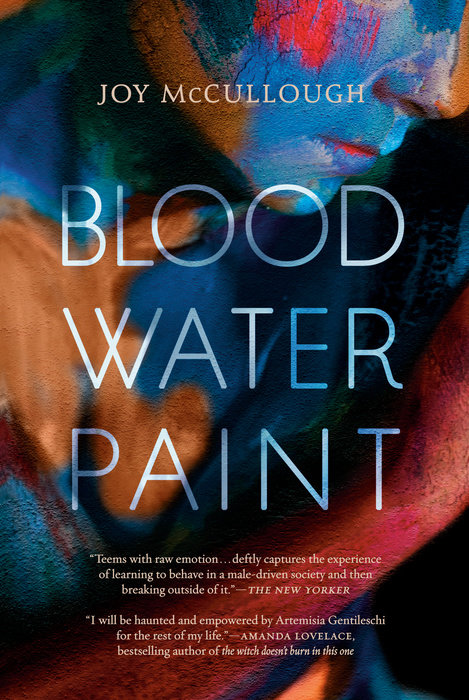
Learn more or purchase at Penguin Random House.
McCullough is a prolific and successful author and playwright. She is also transparent on Threads with how difficult publishing is and all of the rejections that come with each success. I recommend checking out her profile on Threads and her published books—picture books, middle grade, young adult, and adult—on Bookshop.org.
Two winters ago, while she was editing her memoir, I asked her a question about writing about trauma:
Do you have advice/encouragement for a writer who keeps stalling in the middle of a manuscript because she doesn’t want her character to go through the same trauma she went through? The idea of catharsis isn’t enough.
She was gracious enough to answer me.
Yes, I have a few ideas. The first is to skip over the trauma and write the healing or the justice or the vindication she hopefully gets first. Then you’ll know where she’s going and that she’s going to get through it. (And if you really can’t write non-linearly, you could still do brainstorming/freewriting about how she survives.)
Another idea: give the character something you needed in your trauma but didn’t get, like a support system or someone who believes in them, etc. In Blood Water Paint, Artemisia really didn’t have anyone, so I gave her the women in her paintings to walk with her through the journey.
You could also keep in mind when you’re writing the trauma the readers who will feel seen and validated and less alone when they watch the character go through that trauma. I really don’t write these stories for catharsis. It’s more for the connection – that I feel and that I give to other survivors.
Finally, I’m working on memoir now and it’s tough w/o the separation of fiction, but I’m making sure I have really clear ritual markers around when I’m entering into the writing work and when I’m putting it away for the day.
I hope that helps!
Not only did it help me, but when another writer asked a similar question, I shared Joy’s answer, and it helped them and other writers, also. Maybe it can help you, too?
Joy’s memoir, Suffer a Witch, is out now. It also has four starred reviews!
“Suffer a Witch is a searing, precise testament on the long tradition of not believing women. The juxtaposition of the Salem victims with modern patterns, expressed in verse, pulses and aches on the page. McCullough’s words burn in this crucible of truth: these are the lengths men will go to when a woman cries abuse.” —Tia Levings, New York Times bestselling author of A Well-Trained Wife
“From the quicksand of sexual abuse and survival, McCullough conjures the solid ground of healing. The solid ground every survivor deserves to experience—of our belonging to ourselves; of naming harm as harm, when and how we can; of taking back everything we can; of never having to go back to anywhere we cannot. This book is a gift.”—Ashley Hope Pérez, award-winning author of Out of Darkness
“In Suffer a Witch, McCullough gives language to some of the darkest and most isolating moments of survivorhood with unflinching honesty and care. For the survivor, to read McCullough’s story is to feel understood, seen, and advocated for. McCullough’s voice is clear, urgent, and unmistakable. This memoir bravely joins a canon of literature for survivors to carry as both a weapon and a guide. I will be holding this book in my heart for many years to come.”—Hannah V. Sawyerr, Los Angeles Times Book Prize and National Book Award Finalist
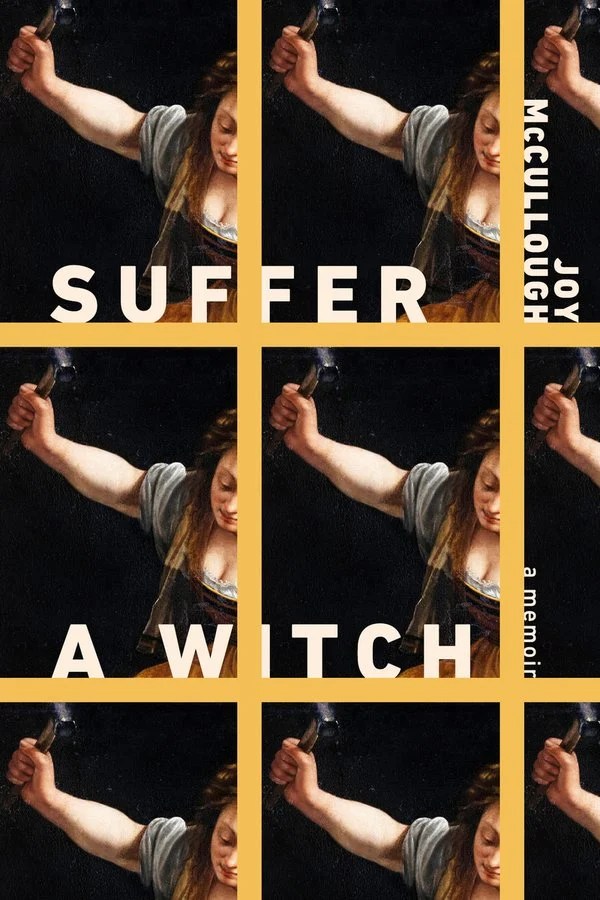
Consider buying Suffer a Witch in person or online, or requesting from your library!
If you don’t have a local independent bookstore, Bookshop.org gives at least 80% of their profit margin to independent bookstores, rather than supporting a billionaire CEO. You can choose which independent shop your purchases will support, and shipping doesn’t take too long!
I’ve been ordering a lot of books lately. The most recent few in an attempt to inspire me to power through imposter syndrome.

