

This is Part 3 of The 8 C’s of Plotting. Read parts one and two first, if you please. Click here for the whole series on the 8 C’s. Click the image below to be taken to the General Fiction Feed.

I’m grouping all four of these parts of the 8 C’s together because, well, some authors do it all in one. single. sentence.
But before I get to examples, let me explain what these four elements are. And to really mess things up, I’m going to do it in the order you figure them out, NOT the order in which they appear in your book.
Change
The Change, or “inciting incident,” is what gives you a story. A character starts off with a sense of stability, something rocks the normalcy boat, and the protagonist is thrown into a sea of chaos. The boat gets shattered by a giant squid, the protagonist can’t swim, there are sharks in the water, and your guy floats on flotsam and jetsam until he gets to shore, where he finds a new stability. He kisses the sand, and the camera fades to black.
Normal->chaotic->normal. This is plot at its simplest.
The Change takes the character out of normal life and changes things. Hence the name. In Finding Nemo, it’s when Nemo gets bagged by a snorkeling dentist.
This is where you start thinking about the beginning of your book.
Opening
Your opening is anything that happens before the change. Do whatever you want with the opening—as long as you keep a reader’s attention. The opening can be your first line, it can be the first scene, or it can be the first chapter. It’s the calm before the chaos, the Status Quo before the inciting incident. Put the change in your first sentence, and your opening is a matter of words. Mind you, they need to be finely crafted, carefully chosen words. (I’ll get to opening lines in a minute.)
In the opening, give your protagonist likable features to make sure the reader likes him or her. Donna Macmeans calls these Rooting Interests, and she posts a list of them on her blog. When I started writing my novel, I didn’t like my protagonist. You know you’re in trouble when YOU don’t like your own main character. Solution? I got him punched in the face and watched him fight back. There. Now I like him.
To show an opposite example, I will never like Catcher in the Rye because Holden Caulfield annoys the crap out of me. To me, Holden is the phony one, not everybody he comes in contact with. (Just count how many times the word “phony” appears in that book.) If Salinger’s intent was to explore the irony of a teenager projecting his own phoniness, then I can appreciate the irony. I will still never pick it up again.
Prologue
If you desire to have your audience skip over a chapter of your novel, entitle it “Prologue.”
Seriously, so many people don’t read the prologue. I remember hearing of one author who’s own daughter skipped over his. I used to be a skipper. Apparently once I read a prologue that completely gave away the ending, because for years I assumed I’d stumble over a spoiler in that section. And I hate spoilers. My husband could hide my birthday present in plain sight, and I’d refuse to look at it until my birthday. He could put it in the refrigerator, and I’d be digging around in there with my eyes closed, using my sense of smell to guide me to the taco salad.
I’m glad I have a nice husband.
Anyway…what if you are writing something and it is ABSOLUTELY IMPERATIVE that you fill the reader in on something before the story starts? Well, if you ask me, you make it your first chapter. Take a hint from Ms. Rowling and just slap a “Chapter One” on that bad boy and be done with it. But it had better have the Captivation in the first paragraph, and you’d better put some foreshadowing or character building in there, too. Otherwise your editor, if she’s worth her salt, will scrap those pages for you. I could be wrong, but I don’t think anybody gets paid by the word anymore. In this day and age, if you want people to read what you have to say, ya’ll better get to the point.
Captivation
This is the first C because it is what makes or breaks a deal with a publisher, not because it necessarily comes first. It’s sort of floating around on the plotting diagram not only because it’s hard to pinpoint, but because it can happen in the opening or prologue, or it can be the statement of the change. The Captivation is what publishers call the “Hook.” To me, the hook is elusive. It might be a characteristic of the protagonist, the setting, an event, or a single sentence, the voice, the style of writing. Basically it depends on genre.
The one rule about “hooks” is this: the earlier it occurs, the better. If you can blow away your reader with the first line, you can guarantee they’ll read the next one. Your first chapter is the most important in the book, and your first line is the most important line. I’m not just talking about selling books, I’m talking about people reading your books. Publishers are readers, too. Let’s talk about opening lines, shall we?

Opening Lines
We are going to start with my favorite first line of all time.
“Once there was a boy called Eustace Clarence Scrubb, and he almost deserved it.” —C.S. Lewis, The Voyage of the Dawn Treader
Home run. Introduction of the character, characterization, and a humorous style.
Here’s my other personal favorite:
“The year that Buttercup was born, the most beautiful woman in the world was a French scullery maid named Annette.” —William Goldman, The Princess Bride
You can tell that I’m a sucker for a humorous narrator. This line begins with voice, setting, and if you pay attention, motif (beauty). It also makes it clear that, though it’s going to start talking about Annette, Buttercup is the main character.
Meredith Borders has an article on The Top 10 Best Opening Lines of Novels. In it, she says, “The first line should tell the reader what to expect in terms of language, plot and character. It should be mysterious and compelling, either poetic or shockingly abrupt.”
While I think her points are valid, I don’t completely agree. I think there’s a bit more leeway. First, I’d say that it should show (cough cough) the reader what to expect in terms of language or style, yes. If the rest of your book is poetic, then make your first line poetic. Just make sure it doesn’t look like somebody else wrote it.
Second, I’m not sure what she means by telling the reader what to expect in terms of plot. I assume she means theme, since she listed the first lines of Pride and Prejudice and Peter Pan in her list. And theme is the backbone of a good story. But plot is what happens in a story. Theme is why the story needs telling.
Third—what to expect in terms of language, plot and character—I’d use the conjunction “or” instead, since some opening lines use either plot or character, not both. I prefer characterizing in the first sentence, since it is a more concrete method than creating a lofty observation. To a writing teacher, concrete is always preferable to abstract. If you start with an abstract line, your second one best be specific and concrete. Otherwise use that observation to characterize a smarmy narrator.
Fourth, how about setting? My writing professors always beat us over the head with three things:
- Show, don’t tell.
- Concrete, not abstract.
- GROUNDING (That’s the war cry which translated means, “Be specific to paint a clear image.” If you use proper nouns, you are certainly grounding.)
Tolkien didn’t start The Hobbit with, “Some place a creature lived.” He also didn’t start with “There once was a hobbit.” He created setting and characterization in just ten words: “In a hole in the ground there lived a hobbit.”
Want 25 more openers? Check this out (some repeats are lengthened here).
Nine Ways to Start a Novel
There are other ways to start a novel. Roseanne Knorr lists nine:
- Startle
- Action
- Anecdote
- Dialogue
- Introduce protagonist
- Introduce conflict
- Establish setting
- Establish arena
- Generate Emotion and Personality
Read her explanations in the full article here. Notice she uses the word “capture” in the title, another word for “hook” or “captivate.”
Discussion
Think of your favorite books. How did they captivate you? What are your favorite opening lines? Comment below with your response.
Exercise
Write at least 3 different openings for the same story. You can use a current work in progress (WIP) or choose someone else’s novel to practice with. Consider which approach is your favorite.
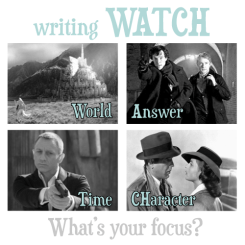
Related post: WATCH, or: Where to Start and End your Novel




 Lara Willard