The 8 C’s of Plotting: Preparation and Problems

This is Part 5 of The 8 C’s of Plotting. Read parts onetwo, and three first, if you please. Click here for the whole series on the 8 C’s. Click the image below to be taken to the General Fiction Feed.

I’m back! This week has been a bit crazy, but here’s Preparation and Problems for you, which is usually the longest section of the book.

After the Complication (C3), the action has started and the adventure has begun. (Or the lovers meet, or the protagonist begins a journey of self awareness. I’m going to go with adventure stories as examples because I know them best.)

Preparation and Problems

This is generally the longest segment of the narrative, when the protagonist makes friends and enemies and learns new skills. In Harry Potter and the Sorcerer’s Stone (or Philosopher’s Stone, for my friends across the pond that got the original HP series), this is where Harry meets Ron, becomes friends with Hermione, is pitted against Snape and Draco, plays Quidditch, plays chess, etc.

If there’s a skill you protagonist needs to know, or if your protagonist needs a certain tool or ally in order to WIN THE STUFF,* then he or she will acquire that during this section.

*You know, defeat the bad guy, get the girl, that sort of thing.

You can throw in some backstory here if you want, or you can be like William Goldman and wait to add all the backstory for secondary characters (Inigo, Fezzik) until the Gloom section. (We’ll get to that next week.)

The Preparation and Problems is also where the Protagonist’s problems will intensify. Think of it as a two steps forward, one step back movement. Those “step backs” are setbacks or confrontations with the/an antagonist. Don’t let your reader forget the antagonist and what is at stake for the protagonist!

Let’s review the Preparation and Problems for The Lion King and The Hunger Games.

In The Lion King, Simba meets Timon and Pumbaa, he learns Hakuna Matata and grows up into a big strong lion. This is upward movement.

Don’t get too comfy—The camera shoots back to Pride Rock to remind us that there’s still a problem Simba’s going to have to face. This is the first Pinch Point. Highlight between the brackets to see the text, which may contain spoilers: [Zazu and even the Hyenas aren’t happy with the way Scar runs things.].

Here’s what Larry Brooks has to say about Pinch Points:

pinch point allows the antagonistic force of the story roaring onto center stage to announce itself and remind us of its dark intentions and inherent threat to the hero’s quest.  To stick it right into our face so that we may fear and [loathe] that which the hero fears and [loathes].

…Every story has a hero.  Every hero has a journey, a quest, a problem to solve, a need to fulfill.  There are obstacles in the way of that quest, often (usually) embodied in the character of an antagonist, or the bad guy.  A pinch point is when the primary opposition to the hero’s quest comes front and center in the story, showing itself to the hero and to us.

…If the hero is being chased by a bear, the bear will show up at the pinch point.  If the story is about an airplane crashing, something that reminds us we’re about to crash will show up at the pinch point.  If the story is about trying to win back lost love, the pinch point is when the departed lover turns up in the arms of another.

—From “The Help” – Isolating and Understanding the First “Pinch Point”

Then there’s the stargazing scene. Simba thinks about his dad, Rafiki has a realization, and Nala shows up. Can You Feel the Love Tonight?

Now, when I first plotted out The Lion King, I put the love ballad in the slot for “Elation.” Except it isn’t. Nala showing up isn’t the real confrontation. She’s more of a set back in Simba’s plan to forget his past. The real confrontation? We’ll get to that next time.

In The Hunger Games, [The Games begin. Katniss nearly dies of thirst (1), she dodges fireballs and gets burnt (2), she takes refuge in a tree and Haymitch sends her ointment for her burn].

You’ll see that there are two big problems that Katniss has to overcome while trying to stay alive during the Hunger Games. The second one is the pinch point—it’s when we are reminded that The Capitol controls the games. In the movie, the Gamemakers get their own scene.

When you have a pinch point—and there are at least two—you have a choice. You can either have another character remind the protagonist about it (Nala telling Simba what is going on at Pride Rock), or you can actually show it, unfiltered by the protagonist’s eyes (A scene devoted to Scar, showing him doing mean, awful things). The latter is more powerful because the reader will experience it for him or herself.

Depending on the length of your book, I’d shoot for two pinch points BEFORE the Confrontation. One can be direct, and one can be indirect. The rest of the time, you can move the plot along by throwing in other obstacles, like general problems or minor antagonists.

Next time we will be talking about the Confrontation, Elation, and Collapse, and we will relate them to the 3-Act Structure’s Midpoint. I can’t make any promises, but I think I’ll publish another post about the 8 C’s before next Friday, since this post was late.Stay tuned, and Write Now!

The 8 Cs chart

The 8 C’s of Plotting: Prologue, Opening, Captivation, Change

This is Part 3 of The 8 C’s of Plotting. Read parts one and two first, if you please. Click here for the whole series on the 8 C’s. Click the image below to be taken to the General Fiction Feed.

I’m grouping all four of these parts of the 8 C’s together because, well, some authors do it all in one. single. sentence.

But before I get to examples, let me explain what these four elements are. And to really mess things up, I’m going to do it in the order you figure them out, NOT the order in which they appear in your book.

Change

The Change, or “inciting incident,” is what gives you a story. A character starts off with a sense of stability, something rocks the normalcy boat, and the protagonist is thrown into a sea of chaos. The boat gets shattered by a giant squid, the protagonist can’t swim, there are sharks in the water, and your guy floats on flotsam and jetsam until he gets to shore, where he finds a new stability. He kisses the sand, and the camera fades to black.

Normal->chaotic->normal. This is plot at its simplest.

The Change takes the character out of normal life and changes things. Hence the name. In Finding Nemo, it’s when Nemo gets bagged by a snorkeling dentist.

This is where you start thinking about the beginning of your book.

Opening

Your opening is anything that happens before the change. Do whatever you want with the opening—as long as you keep a reader’s attention. The opening can be your first line, it can be the first scene, or it can be the first chapter. It’s the calm before the chaos, the Status Quo before the inciting incident. Put the change in your first sentence, and your opening is a matter of words. Mind you, they need to be finely crafted, carefully chosen words. (I’ll get to opening lines in a minute.)

In the opening, give your protagonist likable features to make sure the reader likes him or her. Donna Macmeans calls these Rooting Interests, and she posts a list of them on her blog. When I started writing my novel, I didn’t like my protagonist. You know you’re in trouble when YOU don’t like your own main character. Solution? I got him punched in the face and watched him fight back. There. Now I like him.

To show an opposite example, I will never like Catcher in the Rye because Holden Caulfield annoys the crap out of me. To me, Holden is the phony one, not everybody he comes in contact with. (Just count how many times the word “phony” appears in that book.) If Salinger’s intent was to explore the irony of a teenager projecting his own phoniness, then I can appreciate the irony. I will still never pick it up again.

Prologue

If you desire to have your audience skip over a chapter of your novel, entitle it “Prologue.”

Seriously, so many people don’t read the prologue. I remember hearing of one author who’s own daughter skipped over his. I used to be a skipper. Apparently once I read a prologue that completely gave away the ending, because for years I assumed I’d stumble over a spoiler in that section. And I hate spoilers. My husband could hide my birthday present in plain sight, and I’d refuse to look at it until my birthday. He could put it in the refrigerator, and I’d be digging around in there with my eyes closed, using my sense of smell to guide me to the taco salad.

I’m glad I have a nice husband.

Anyway…what if you are writing something and it is ABSOLUTELY IMPERATIVE that you fill the reader in on something before the story starts? Well, if you ask me, you make it your first chapter. Take a hint from Ms. Rowling and just slap a “Chapter One” on that bad boy and be done with it. But it had better have the Captivation in the first paragraph, and you’d better put some foreshadowing or character building in there, too. Otherwise your editor, if she’s worth her salt, will scrap those pages for you. I could be wrong, but I don’t think anybody gets paid by the word anymore. In this day and age, if you want people to read what you have to say, ya’ll better get to the point.

Captivation

This is the first C because it is what makes or breaks a deal with a publisher, not because it necessarily comes first. It’s sort of floating around on the plotting diagram not only because it’s hard to pinpoint, but because it can happen in the opening or prologue, or it can be the statement of the change. The Captivation is what publishers call the “Hook.” To me, the hook is elusive. It might be a characteristic of the protagonist, the setting, an event, or a single sentence, the voice, the style of writing. Basically it depends on genre.

The one rule about “hooks” is this: the earlier it occurs, the better. If you can blow away your reader with the first line, you can guarantee they’ll read the next one. Your first chapter is the most important in the book, and your first line is the most important line. I’m not just talking about selling books, I’m talking about people reading your books. Publishers are readers, too. Let’s talk about opening lines, shall we?

Opening Lines

We are going to start with my favorite first line of all time.

“Once there was a boy called Eustace Clarence Scrubb, and he almost deserved it.” —C.S. Lewis, The Voyage of the Dawn Treader

Home run. Introduction of the character, characterization, and a humorous style.

Here’s my other personal favorite:

“The year that Buttercup was born, the most beautiful woman in the world was a French scullery maid named Annette.” —William Goldman, The Princess Bride

You can tell that I’m a sucker for a humorous narrator. This line begins with voice, setting, and if you pay attention, motif (beauty). It also makes it clear that, though it’s going to start talking about Annette, Buttercup is the main character.

Meredith Borders has an article on The Top 10 Best Opening Lines of Novels. In it, she says, “The first line should tell the reader what to expect in terms of language, plot and character. It should be mysterious and compelling, either poetic or shockingly abrupt.”

While I think her points are valid, I don’t completely agree. I think there’s a bit more leeway. First, I’d say that it should show (cough cough) the reader what to expect in terms of language or style, yes. If the rest of your book is poetic, then make your first line poetic. Just make sure it doesn’t look like somebody else wrote it.

Second, I’m not sure what she means by telling the reader what to expect in terms of plot. I assume she means theme, since she listed the first lines of Pride and Prejudice and Peter Pan in her list. And theme is the backbone of a good story. But plot is what happens in a story. Theme is why the story needs telling.

Third—what to expect in terms of language, plot and character—I’d use the conjunction “or” instead, since some opening lines use either plot or character, not both. I prefer characterizing in the first sentence, since it is a more concrete method than creating a lofty observation. To a writing teacher, concrete is always preferable to abstract. If you start with an abstract line, your second one best be specific and concrete. Otherwise use that observation to characterize a smarmy narrator.

Fourth, how about setting? My writing professors always beat us over the head with three things:

  1. Show, don’t tell.
  2. Concrete, not abstract.
  3. GROUNDING (That’s the war cry which translated means, “Be specific to paint a clear image.” If you use proper nouns, you are certainly grounding.)

Tolkien didn’t start The Hobbit with, “Some place a creature lived.” He also didn’t start with “There once was a hobbit.” He created setting and characterization in just ten words: “In a hole in the ground there lived a hobbit.”

Want 25 more openers? Check this out (some repeats are lengthened here).

Nine Ways to Start a Novel

There are other ways to start a novel. Roseanne Knorr lists nine:

  1. Startle
  2. Action
  3. Anecdote
  4. Dialogue
  5. Introduce protagonist
  6. Introduce conflict
  7. Establish setting
  8. Establish arena
  9. Generate Emotion and Personality

Read her explanations in the full article here. Notice she uses the word “capture” in the title, another word for “hook” or “captivate.”

Discussion

Think of your favorite books. How did they captivate you? What are your favorite opening lines? Comment below with your response.

Exercise

Write at least 3 different openings for the same story. You can use a current work in progress (WIP) or choose someone else’s novel to practice with. Consider which approach is your favorite.

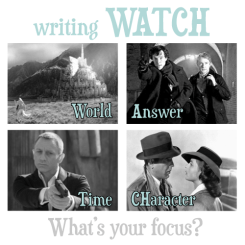
Related post: WATCH, or: Where to Start and End your Novel

WATCH-01

Musical Motivation: Playlists

Last week I asked if you wanted any other sizes for the “Write Now” posters. Here’s the template for 960×640 resolutions (iPhone). Right click the button below and “save as.” Remember, it’s all white, so it might look invisible if you click the button. Place over the image of your choice.

Here’s an image I created using the template above, as well as a black version. Download either for your phone home screen as a constant reminder.

Back to regular programming

I hope you’ve thought about what kind of music you listen to whilst writing, for now is the time to share! Here’s how you’ll do it:

What’s your playlist? The playlist you listen to while writing, or any list of songs that get you to write. Describe the mood of the playlist

What’s your genre? The genre you write most frequently, or the genre you are currently writing under. If you write straight up fiction, include the mood. How serious or goofy is your work?

What’s your theme song? This is the theme song for your WIP. It’s the song that would be in the trailer head up the soundtrack of the film version.

Leave a comment with your answers. You can add links if you’d like. I monitor my comments, so I’ll do my part to exterminate any spam.

Pssst…If you’re a writer blogger person, feel free to ask your readers the same questions on your blog, but please link back to this post so that my readers can read your post, too! Everybody gets more playlists that way 🙂

Answers de Lara

Mix: If my love life were made into a movie, Love Music would be the soundtrack. It’s a musical bildungsroman, covering little girl romance to married life. Most of the songs are by indie artists, so there’s a bit of whimsy or fantasy to them.

Genre: My current WIP is a time-traveling historical fantasy. I like to refer to it as “mainstream fantasy” because it’s historical fiction with elements of fantasy and science fiction. Like the playlist above, it’s fun and whimsical. The second book in the series has some more action and sci-fi elements to it. I’ll probably listen to the TRON soundtrack while writing that one.

Theme song: The theme song for my current work would be the oldie-but-goodie “Starlight” by Muse. Video is below, with a low picture quality, unfortunately. [Rated G]*

Want to know the videos I used in today’s image? Here you go. I can’t stop listening to these songs.

“We Are Young” by Fun. [PG—V]*

“Blue Jeans” by Lana Del Rey [PG-13—S,V]*

“Somebody That I Used to Know” by Gotye [PG—N]*

*Note: As a courtesy for my readers, sometimes I’ll include “ratings” for external links. This includes an age rating [G, PG, PG-13, R] and codes for profane language [L], violence [V], nudity [N], or sexual themes [S]. You don’t need to rate any links in your comments, but please let us know if any music or videos you link to are NFSW (not safe for work).

Write now.

The 8 C’s of Plotting: Worksheets

8C-worksheet

If you haven’t read Part One, the introduction to the 8 C’s, read it here!

Use these worksheets to:

  • plan out the main plot skeleton of a novel
  • reduce a complex novel into one, overarching plot
  • understand the main plot of your novel, all the better to pitch with
  • get an idea of what to put in your synopsis
  • recognize how virtually all movies and novels use a similar structure
    • (and how each modifies the structure to fit its own needs)
  • make your other writer friends jealous of how organized you are

Do not use these worksheets to:

  • make money publishing or reposting my work
  • create your own blog post on the 8 C’s without linking back here
  • make paper airplanes (unless you recycle, of course)

Continue reading