WATCH, or: Where to Start and End your Novel

This post explains the acronym WATCH, asks what kind of novel you’re writing, and then teaches you where/how to begin and end your novel. Short fiction writers—don’t fret. You can learn about beginning and ending your stories effectively, too.

I’ve been reading Characters and Viewpoints by Orson Scott Card* and learning so much about point of view and types of novels that I’ve not read anywhere else. So of course I’m going to share what I’m learning with all of you!

[*EDIT: When I read the book and wrote this post, I was unaware that Orson Scott Card is homophobic. As such I do not recommend his book. I still learned something from it though, and I’ve shared that below.]

My main takeaway was his idea of a “MICE Quotient.” He says there are four types of stories. Each story has all four elements, but stories will emphasize one more than the others. M.I.C.E. stands for Milieu, Idea, Character, and Event.

I think his use of “Idea” is a bit misleading, and I’d probably have to look up “milieu” again every time I saw it in the future. So I created my own mnemonic device that works well in the context of my time-traveling historical fantasy.

W.A.T.CH.: Which will you focus on in your writing?

WATCH

  1. World
  2. Answer
  3. Time
  4. CHaracter

Okay, I know the H in “character” is silent. Nobody’s perfect.

World

This is Card’s “Milieu,” but “world” is far less pretentious and more memorable, in my humble opinion. You’ve probably heard of “world building” if you are familiar with Sci-Fi and fantasy, or the broader term “universe.” World concerns itself with setting, place, time, culture, customs, manners, and the like. Every novel has some degree of its own world. In some stories, though, the world-building is so central to the book, it almost becomes a character itself.

Westerns, epic fantasy, and historical fiction tend to focus on World.

Answer

This is what Card refers to as “idea,” but I think “Idea” has connotations of “theme” and not much else. An Answer story poses a question or a problem that needs to be answered or solved by the end. The question could be obvious—”Who murdered Mr. Boddy?”—or it could be figurative. If it’s figurative, the answer might very well be the theme of the story. Take The Great Gatsby, for example. While the World (1920s), Time (events), and Characters (Gatsby, Carraway, Tom, Daisy, etc.) are all important and well-developed, they are all used to illustrate the themes (money, power, time, etc.). An allegorical story like Pilgrim’s Progress has universal, and thereby flat, characters, but it can get away with it, because the story is about finding answers. What is Christian’s purpose? To get to the Celestial City.

Mysteries, capers, allegory, and some sci-fi and classical fiction focus on Answers or theme.

Examples: Sherlock Holmes mysteries, Ocean’s Eleven, Pilgrim’s Progress, The Great Gatsby

Time

Time deals with events. Cause and effect. The plot. What happens. If you’re trying to get a writing degree at a respectable university, they will tell you that Character must always trump plot. And while that’s true for literary fiction, it’s not true for all fiction. Anne Lamott, whom many of us regard as one of the finest writing instructors alive, urges writers to think about characters and their motivations, hang the plot. But in Bird by Bird, she confesses that she had to rewrite one of her novels countless times, because the plot made no sense, and her editor kept telling her it didn’t work. So she learned how to do a plot treatment, and she fixed it. Plot gets thrown under the bus by some respectable writers, but it’s definitely important.

I really enjoy character-driven short fiction, but if I pick up a novel in which nothing actually happens, I’ll throw it across the room and rage about it to my poor, unsuspecting husband. Popular fiction, the kind that is nearly impossible to put down, focuses on Time and what happens in the book. Hopefully the characters will change by the end of the book, but that isn’t always the case. Katniss Everdeen isn’t the deepest character on the shelf, but she sure does a lot.

Time novels start with something amiss that needs to be fixed. They right a wrong; they “save” women from spinsterhood. Or at least they try to fix the problem. They primarily try to change what happens, though the people in the story are usually changed, too.

Because they deal with problems, the line between Time stories and Answer stories can be a blurry one. The difference is that in an Answer story, something is learned or realized, resulting in an understood truth. But in a Time story, something happens, resulting in a shift in circumstance. Answer stories have an intellectual conclusion, whereas Time stories have a physical one.

Dystopian, disaster, justice/revenge, thriller, horror, sci-fi and romance are generally Time- or event-focused.

Examples: The Hunger Games, Jurassic Park, The Count of Monte Christo, The Da Vinci Code, Dr. Jekyll and Mr. Hyde, Doctor Who, Pride and Prejudice, Bridget Jones’s Diary.

Character

A character-driven novel is one in which the most important factor isn’t what happens, when and where it happens, or the author’s intent. The important thing in a character-driven story is personal growth. The character should change for the better or for the worse. If the character doesn’t change, the reader grows in understanding of why that character will never change.

Contemporary literary fiction concerns itself primarily with character: who characters are and why they act the way the way they do. Motivation, motivation, motivation.

General fiction, literary fiction, and the bildungsroman (a coming-of-age story) depend primarily on character.

Examples: To Kill a Mockingbird, The Things They Carried, Huckleberry Finn

How to begin and end the story

Bilbos-Birthday-Party

World

When the world in your story is the focus, you begin by introducing the world. “In a hole in the ground there lived a hobbit.” Tolkien created a gigantic universe that is Middle Earth. His stories begin by showing what life is like. Then things begin to shake that world up a bit. Orson Scott Card gave the example of The Lord of the Rings. Why does the story not end when the One Ring is destroyed? Because the story isn’t just about Frodo Baggins and his Fellowship; it’s about how Middle-Earth completely changed. So the story ends not at Mount Doom, or at Aragorn’s coronation, or after the scouring of the Shire. It ends when the last of the elves leave Middle Earth. The world has changed. It’s changed for Frodo, too, so he leaves with the elves.

Grey Havens

Where are my tissues?

Answer

If you’ve read or watched many mysteries, you know they all start the same. They might have a couple of lines or minutes introducing the protagonist as a person capable of solving a mystery, but they really start when someone’s been murdered or another crime has been committed. They start with a mystery or a question. Why do you think some people call mysteries “Whodunits”? The story ends when you find out who did it.

study-in-pink

In theme stories, the story begins with theme and ends with theme. The Great Gatsby begins with advice (given in the past) about considering someone else’s history against your own, and how those histories have affected your presents:

“In my younger and more vulnerable years my father gave me some advice that I’ve been turning over in my mind ever since. ‘Whenever you feel like criticizing anyone,’ he told me, ‘just remember that all the people in this world haven’t had the advantages that you’ve had.'”

It ends with the message that even though we make effort to change our futures, we will always be pulled back to our past:

“So we beat on, boats against the current, borne back ceaselessly into the past.”

You end the story once the characters or the reader has a new understanding.

In a series of Answers stories, they might end on a new question. Readers read the next book to have the new question answered. That’s usually how seasons of Castle end. And if you watch Sherlock, you really know what I mean about ending on a question!

Time

Time stories begin by showing you what’s wrong. There might be a quick introduction of characters, but then we see what sort of circumstance the characters are in, and they realize they’ve got to do something about it. Or they reject it but end up doing something anyway.

Lizzie Bennet Diaries

My mom gave me this shirt.

The Hunger Games begins with the Reaping. Pride and Prejudice begins with a woman who, according to her mother, needs a husband (preferably a rich one). Doctor Who episodes usually begin with the discovery of aliens bent on the destruction of the universe.

Time stories end when circumstances change. The woman gets married; the world is saved. Justice is had; someone is avenged. They basically end when there’s nothing else to tell—nothing else happens to change the circumstance of the world or of the protagonist. At least not until the sequel. If a time story is part of a series, one story might end when the circumstances change in order to create a new story. The Hunger Games ends after circumstances change for Katniss and Peeta. They’ve hit a new normal. But Haymitch assures them that more change is to come. Catching Fire is notorious for its cliffhanger ending.

Pride & Prejudice wedding

The story ends here when it’s one about finding romance. Achievement unlocked.

Character

Character stories begin with the character living a normal life.

500 Days of Summer Todd Hanson

Everything that happens in the story affects the character somehow, and by the end of the story, the character has grown. Character stories end with the change or growth in character. A new life for the character has begun.

(500) Days of Summer is not a love story, it’s a character story. It doesn’t end with a relationship, it ends when Tom finally gets a life. (I adore this movie.)

Chris Oatley has a great post on “How to Write Great Character Introductions” [archived] over at Paper Wings Podcast. If you’re writing a character-driven story (and even if you aren’t), be sure to read it.

—-

Take some time and think about your favorite books and movies. What kinds of stories are they? Where do they begin? How do they end?

Be sure to check out WATCH Part Two—a quiz on where you should begin and end YOUR novel.

Once I get through my notes and finish Characters and Viewpoint, I’ll be starting a new series on Point of View. Subscribe or follow me on Facebook to stay in the loop!

beginning & ending your novel: a lesson in genre

Voice: Talk Like a Pirate

The best way to learn how to write well is to read, read, read. Read the good stuff and pick them apart to find out why they work. Read the crap to figure out why it’s terrible.

The problem is, many of us just don’t have time to read as much as we’d like. So I could give you list of novels that do things well, but I don’t expect you’d read them. But you know what you DO have time to read? Picture books.

The time commitment is only one reason why children’s literature is so freaking awesome. William Zinsser, author of On Writing Well, once said there are four “basic premises of writing: clarity, brevity, simplicity, and humanity.” What exemplifies these better than a picture book?

My son and I have increased our time at the library of late. Whenever I come across a good picture book that demonstrates a key literary premise, I’ll share it with you. Today’s book concerns VOICE.

Voice: Talk Like a Pirate

Voice is the way a character sounds when talking. Each of your characters needs to have his or her own distinct voice. An uppity Manhattan banker isn’t going to parrot a plumber from Hooverville. You, the writer, need to have your own voice, too.

The best way to see if your writing has some legitimate voice to it is to read it aloud. And that’s exactly what you need to do with this book:

pirate-pete

(Click the link to be taken to an Amazon page. If you order from the Amazon page using this link, I’ll receive about $0.000001 from Amazon. Rolling in the dough over here, don’t you know.)

Pirate Pete’s Talk Like a Pirate is a tale about a pirate trying to gather for himself a crew of scallywags. The condition for the job, however, is that each candidate needs to talk like a pirate:

“Ye gots to be stubborn and mighty cranky,
Ye gots to be dirty and awfully stanky!
Ye gots to load a cannon and know how to fire it,
But most of all, ye gots to talk like a pirate!”

Read this book aloud, and you’ll see the difference between Pirate Pete’s voice and that of each of the potential crew. I read the first candidate aloud with a mamby-pamby French accent, because that’s what it sounded like in my head.

I’m tagging this under “Writing Resources.” Give me some time to be creative, and I’ll come up with “Writing Exercises” for you to practice on. Until then, start talking like a pirate.

Letters from Anne Lamott

Motivation

No, I have not written correspondance with Anne Lamott, and I don’t have copies of any of her epistles. I do, however, have a copy of Bird by Bird, which I reread cover to cover today.

Two things that resonated with me particularly during this read had to do with letters, namely the first five of the alphabet.

Alice Adams’ ABDCE

In her chapter on Plot, Lamott reference’s Alice Adam’s formula for writing short stories. It goes like this:

  1. Action—This is how you start, how you get the reader reading.
  2. Backstory—This is how you set up for that action, after the fact, when the reader is already hooked and curious about your characters.
  3. Development—This is when you develop the characters based on their personalities and what’s at stake. If you know your characters, the plot will flow naturally.
  4. Climax—Everything comes together for the characters during the climax. Lamott says the climax needs to include a killing, a healing, or a domination. These could be literal or metaphorical. Either way, the characters are not the same after the climax.
  5. Ending—After the climax, the ending needs to make sense. “What is our sense of who these people are now, what are they left with, what happened, and what did it mean?” (page 62)

Plotters and Pantsers

There are two basic types of writers: the plotter and the pantser. I’ll use extremes to illustrate my point, and hopefully you’ll find yourself somewhere in the middle.

The extreme plotter plans before writing and risks writing something plot-driven rather than character-driven (I talk about that here). These are the people that write 28 trashy novels per year and somehow end up on the best-seller list. Their films generate a buzz and sell a lot of popcorn, but end up in the discount DVD bin five months after release. The extreme pantser writes by the seat of his or her pants, letting the story develop naturally and organically, and risks having an artfully written convolution that is unpublishable. These are the people who write fine literature that nobody particularly understands. Their movies are discussed primarily in film classes.

Sometimes you plan out a 4-foot-by-4-foot garden plot. You plant the seeds in even little rows, pushing them inches down into the Ph-balanced soil. But then you have a number of cold days, or not enough rain, and the spinach wilts and the corn grows and casts an eternal shadow over the unsuspecting peonies. Before you know it, the tomatoes are creating their own political party of radicals, hatching a plan to overthrow the oligarchy that is your authorship. Then you have to wonder if your garden needs a serious thrashing, if you should just plow it up and turn the whole thing into a compost pile, or if you should start a new, nonfiction book entitled “1001 Uses for Tomatoes.”

Sometimes you wander, barefooted, into a patch of wildflowers and lie gazing up at the clouds and enjoying the smells and sounds of the rustling, absorbing them into memory. You come back, day after day, while the Earth spins around and the seasons change, observing and absorbing, until you have a collection of lovely vignettes. But your editor just doesn’t see a story there. So you go back to your wildflower patch with a shovel, find a spot with a nice view, and you dig yourself a grave there and bury yourself up to your waist in dirt, and call a friend to come finish the job for you, because you can’t cover yourself completely without leaving some arm waving around pathetically.

Whether you are a plotter or a pantser, whether you’ve got a messy draft or are in the middle of a draft with no foreseeable future, you might want to consider a plot treatment.

Plot Treatment

A plot treatment addresses what happens and why. It tells you “who the people [are] and what the story [is],” (page 91).

Here’s how Lamott did it:

“I sat down every day and wrote five hundred to a thousand words describing what was going on in each chapter. I discussed who the characters were turning out to be, where they’d been, what they were up to, and why. [And] I figured out, over and over, point A, where the chapter began, and point B, where it ended, and what needed to happen to get my people from A to B. And then how the B of the last chapter would lead organically into point A of the next chapter. The book moved along like the alphabet, like a vivid and continuous dream.” (92-3)

Sound familiar? It’s a lot like Suzanne Johnson’s Relationship Arcs. Try my twist of a plot treatment with my Chapter Outlining Like a Pantser technique.

Don’t be afraid to plot. Plotting helps make your story a story. It gives you that beginning, middle, and end. Without it, you might have some nice images, but so does the Alzheimer’s patient down at Happy Acres. They might be real, truthful, and beautiful, but if you don’t link together the cat with three legs, your great aunt’s penchance for covering furniture with doilies, and the lingering smell of buttercream frosting together in a logical order, no one is going to have any idea what you are talking about, or why those things are important.


I’m a plotter, and I have an outline, but that plan has grown from my knowledge of my characters. They still surprise me from time to time, so if my outline changes, it changes. I don’t change my characters to fit the story, I change the story to fit them, but I have a pretty good idea of what decisions they’ll make for themselves based on their character.

I’ve spent half a decade with my characters, virtually taking them out to eat. Gareth and I always get cheeseburgers or waffles at indecent hours, constantly wiping our mouths of the ketchup or blueberry syrup as we talk about movies. Isolde and I get frozen ice cream topped generously with fruit and white chocolate or coconut, unless we are having a self-conscious day, when we’ll chat over salads between sips of lemon water. Robin is less predictable, wanting salmon one day and Wisconsin cheese baked macaroni another. I gaze at the menu in indecision while he talks about his latest wedding gig.

If you know your characters, the story will develop while they develop. If you don’t know your characters, take them out for coffee and let them order whatever they want. Listen to their story, and then go home and write it down.

I recommend borrowing Bird by Bird from the library, at least. If you are a habitual highlighter or underliner like myself, however, you can buy the book on Amazon here: Bird by Bird: Some Instructions on Writing and Life

[Historical Fiction] Friday

Historical Fiction

I can’t believe that NaNoWriMo is less than a week away! I’ve been trying to prep by doing research, since my novel is set mostly in an alternate 12th century England (I know…I know). My intention was to be historically accurate—as much as possible. But when I started researching castles, I realized that my mental image was going to have to change in some respects. For example, here’s a rough idea of what I was picturing:

But Alas, Conwy Castle was begun in the 13th century. One hundred years later. Keep reading to see a progression showing how difficult it is to date a castle, and how people really have almost no idea what castles looked like in the 12th century.

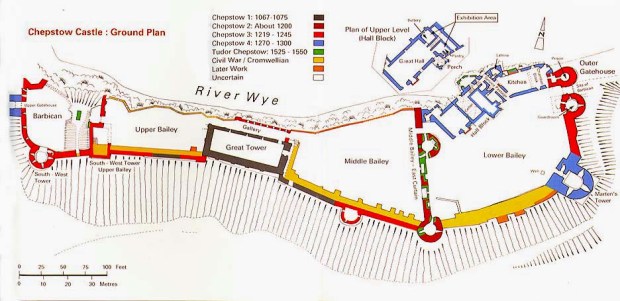
Here’s a floor plan of Chepstow Castle, showing how many renovations the castle received over a few hundred years.

Here’s a model of what the castle looked like in the 1500s, during the Tudor time period which followed the Middle Ages.

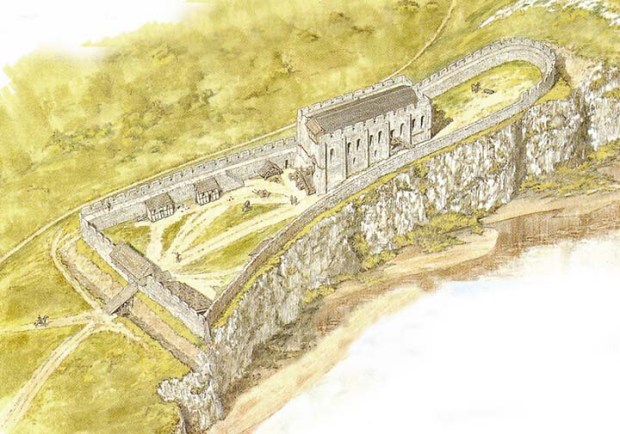
And here’s what it looked like roughly around the 12th century.

Exciting, right? A stone “tower” that looks sort of like a prison building, with a couple wooden huts outside? Okay, I exaggerate a bit. But seeing this castle made me go, Eeesh, not what I was expecting, for my heroine who will be living in something like this.

But then to complicate things further, you are not only supposed to get the time period right, but you should also get the class distinction right. Thankfully—as far as I can tell—Chepstow, as lovely as it is, is a fairly modest castle compared to others built in the 12th century. A King’s castle would be more luxurious. Kings’ castles usually get refurbished and rebuilt more often that other castles, though, which is why many (if not most) of the castle ruins in the UK are remnants of much more contemporary designs.

I’ll tell you that I DID find a castle that will and does inspire me and is from the correct time period, and belongs within the correct financial ranking. But all of this research led me to have a discussion with one of my writer friends, and I’d like to hear your input on it, too. Yes, even if you read this post a few years down the line. I’m curious to what you think! And I’ll probably still be working on the novel then, anyway.

How important is historical accuracy in a novel? Would you rather read a novel that 1) gets its history right or 2) tweaks the facts for the sake of their story?

I recently read Christy English’s The Queen’s Pawn. I don’t recommend it. The whole premise of the book was an inaccuracy, but it turns out, finding historical inaccuracies was the only entertainment I squeezed out of the reading. My conclusion is that if you are going to get history completely wrong, you had better write an engaging story so that I the reader will forgive you. I haven’t forgiven Christy English, because the story was not interesting to me. Rewriting history just so you can write about a middle-aged man fornicating with a pubescent teenager is not my idea of worthwhile literature. Lolita it wasn’t.

Ahem. Anyway, your thoughts on historical accuracy?