#CPPitch—a Critique Partner Mixer

cppitch

Have you written (or are you writing) an adult or new adult novel?*

Do you want a critique partner to work with and improve BOTH of your novels?

Is your novel between 60,000–120,000 words?**

*For the case of this mixer, any novel with a main character 18 or older, or a novel with a young protagonist but adult themes (like The Ocean at the End of the Lane) in the genres listed below will be eligible. A “New Adult” novel has a protagonist between 18-25 and concerns itself with the transition into adult life: starting a new career, navigating college, or engaging in a serious relationship.

Young adult, middle grade, or other children’s books are not included in this mixer. However, if you decide to organize your own, I will link to your information!

**If your novel is not yet finished, you can still participate if you have written at least 60,000 words in this novel. You will need to critique your partner’s work first, and he/she should not critique yours until you are finished and have edited it yourself. If you have written more than 120,000 words, you can’t expect your CP to read more than that. My advice? Cut the fat, then have your CP read your novel. Otherwise find a CP with a longer word count also.

Genres

Since I’m running this shebang, I’m picking my own genres to include. If you write straight-up romance or mystery, you can easily find critique groups online. If you wrote erotica, please organize your own CP mixer! 

Is your novel one of the following genres?

  • Fantasy
  • Fantasy + Romance
  • Historical Fiction (also Historical Romance)
  • Romantic Comedy Crime Solving / Crime Fighting (Yes, I am that specific. Think Stephanie Plum novels, The Thin Man, Mr. & Mrs. Smith, or the TV shows Castle and Veronica Mars)
  • Other (Other genres like mystery, thriller, contemporary, or literary MUST include a generous helping of either comedy or romance. Erotica is not accepted.)
  • Time Travel (I can include this under Historical Fiction or Fantasy—whichever you think will be the best fit. For Science Fiction that is not time travel, it must include either romance or comedy, and it will be listed in the “other” category.)

These are how I’ll arrange your pitches. If you wrote a time travel novel, for example, decide which category has the most family resemblance. If you wrote a funny mystery or a romantic thriller, those would go in the “other” category.

I’m going to pick one pitch from each category and give that person a free line-edit of their first ten pages!

What I will not accept

Do not enter this mixer if:

  • …your pitch/query/first 250 has words in it that will trigger my safe search or result in my getting spam emails for penile enhancement
  • …your novel is erotica, a novel about a person’s sexual journey. If the O is more important than the connection made during a sex scene, then it’s too erotic for this mixer.
  • …the romance contains infidelity
  • …the film version of your novel would garner a NC-17 rating, either for gore or sex

This mixer is for fantasy, Historical fiction, and genre fiction with romance. One or two sex scenes is fine! Rated-R sexiness is fine! If you wrote a different genre but your novel is funny, enter it into the “other” category.

Again, if you organize a mixer for other genres, let me know in the comments and I will link to your information. 

How to enter

Here’s what you’ll need:

  • Your name
  • Your Twitter username (if you want people to connect with you)
  • Your email (this is how I will communicate with you. It will NOT be released to anyone else without your permission)
  • Your novel’s title
  • Age category
  • Genre (see above)
  • Word count
  • A one-sentence pitch (If your protagonist is in college or is younger, include that in your pitch)
  • Your query letter (Just the main pitch, not your bio or any salutations)
  • The first 250 words of your novel (250 words MAX. Stop mid-sentence or go under.)

You have until August 31st at 11:59 pm EST to enter. 

I will post your name, Twitter handle, word count, age category, genre, and one-sentence pitch in a new post on September 2nd. Entrants will be organized by genre, not age category.

See the current list here! Check back September 1st to see the final list.

If you write several one-sentence pitches and don’t know which one to enter, tweet them with hashtag #CPPitch, ask your friends to vote, and see which has the most favorites.

Add other authors and follow them on Twitter!

September 1st and 2nd

Pick 5 stories you think you’d like to read, at least 2 from your category. (That’s right! If you wrote a fantasy, that doesn’t mean you can’t pick a funny mystery to read!) I will publish a form on the 1st which you will use to submit your list to me.

September 3rd and 4th

I will mark any entrants that got chosen to be #PitchWars mentees. Congrats to them! But they can’t participate in #CPPitch. Then I’ll email each of you the query and first 250 words from each of your top 5.

(If there are more than 100 entrants, I am NOT going to email everyone. See disclaimer below.)

September 5th and 6th

Narrow down your top 5 to just 3. Email me back with your choice by 11:59 on September 6th.

September 7th

Wait patiently while I play matchmaker. Do not email me on any other subject, please. If you have questions, ask on Twitter. I will not respond to other emails at this time.

September 8th

Continue to wait patiently until you receive an email from me with the name of your critique partner(s).


Disclaimer

I have no idea how the turnout for this mixer will be. I will sort up to 100 entrants, starting with Fantasy and working my way down. If more than 100 enter, then I’ll still list the entrants and pitches for the remaining categories, but y’all will have to choose CPs amongst yourselves.


Final words:

Of course, you can ask other members if they will critique your work, but no one is obligated to work with anyone else. Besides, you want a CP that will enjoy your story, right?

I recommend exchanging one to three chapters at a time. If it turns out one of your CPs isn’t contributing, you don’t have to give them feedback. Then you don’t critique 50 pages for someone that only critiques 2 for you in return.

Remember, be cordial to each other. Be professional. Set reasonable deadlines, but be understanding if something comes up. And be honest if something comes up for you that will keep you from contributing.

Above all, be an easy person to work with.


Submissions are now closed. Thank you to everyone who participated!

(Do you see an ad below? If so, it’s a WordPress ad. I receive nothing from those sponsors. If you log into WordPress, you will not see ads.)
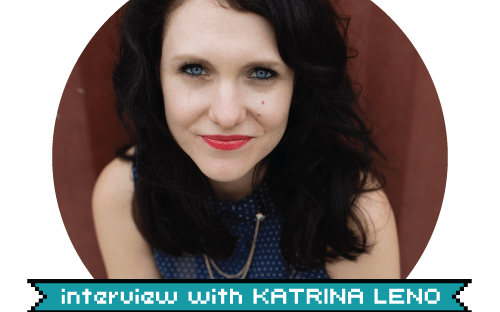
Author Chats: Interview with Katrina Leno

leno-chat

Katrina Leno’s debut novel, The Half Life of Molly Pierce, is coming out July 8th! Order it at The Book Depository, Barnes and Noble, or Amazon.

Hi Katrina, thanks for agreeing to do this interview! Most of my readers are unpublished authors, and I’m sure they’d love to hear your journey as a writer, especially through drafting, editing, and submitting. First, how did you deal with rejection?

I’ve heard so many horror stories about the publishing industry, about people trying to get books sold for years and years… But I have to say, I had the most positive, encouraging experience from the very beginning. Even my rejection letters were kind and honest and said things like “We JUST bought a book like this, otherwise we would scoop this up!” or “You are so talented and your book is great; it just isn’t right for our list for the following reasons.” I think as far as rejection goes, you just have to really understand that there are BILLIONS of people in the world. Not all of them are going to respond to your book. And that’s really okay. Read your rejection letters, though. Try and glean some wisdom. These are really smart, intelligent professionals who have taken the time to read your work. Why don’t they want to buy it / represent you? Is there something you can do better or differently next time? Use your rejection letters as a tool for your own improvement. Find the positive. And then mooooove on.

Great advice. So how did you find your agent?

I actually queried a very small handful of agents, because I get overwhelmed easily and didn’t want to put myself in a weird position—querying fifty agents and then getting them all mixed up or something. I sat down with Writer’s Market and a pad of paper and took notes on everyone that immediately stood out to me. Then I did research on their current client list and what sort of books they represented. In the end I queried a very small group of agents. I received two offers for representation, and one request for a rewrite and resubmission. I spoke to the three agents on the phone and made my decision based on how our conversations went. I am OVERJOYED with my agent. She is truly a gem. So, the takeaway here: take your time, do your research, make sure you’re querying agents that make sense for your book, and make sure you’re sending them EXACTLY what they’ve requested (the quickest way to get your query chucked into the slush pile? Sending them twenty pages of writing when they’ve only asked for ten. Seriously. Follow instructions!). It took me about two months from when I started querying until I found my agent. 

Next step: My agent then queried a small handful of publishing houses, and one by one they all said no. BUT, they all said no in the thoughtful ways I mentioned above. So the rejections really didn’t bother me, because they all made sense. I chose to look at it as a learning experience. It’s all about perspective! I could just as easily have taken to bed and spent weeks sulking as each new “no” came in. 

A good perspective to have! (I’ll try to remember that the next time I reach for the ice cream.) What was your reaction when you heard about your deal with HarperCollins?

When I finally got that “yes” from HarperCollins… My agent emailed and asked if she could call me. I was alone in the house. I took her phone call in the kitchen and as she talked, I sat on the floor. I didn’t move for ten minutes afterward. My body was in complete shock. It was the best feeling, but completely overwhelming. I’d spent so long coaching myself not to get bummed out about the rejections that I was wholly unprepared for the “yes.” But—unprepared in the best way possible. 

You mentioned on Twitter that you quit your job. What was your day job, and what are you working on now?

Oh man, I just quit my job! Every time I think about that, I feel SO HAPPY. It was the best decision. I was working as a retail manager in a really negative, caustic environment and it was stifling any sort of creative energy I was trying to access. I am EXTREMELY lucky that I am able to take a couple months off in order to re-center myself and, hopefully, write another book. Right now I’m working on a novel that’s been brewing for a number of years and has taken many different forms during that time. Maybe it goes without saying, but I LOVE writing, and I am happy it’s all I have to focus on right now. I am the best version of myself when I am maintaining a word-count-based writing schedule. (Currently: 5K words a day. This is lofty, and I don’t beat myself up if I don’t quite get there, but I damn well make a huge effort to do so.)

Five thousand words every day? Nice! How long did it take you to write The Half Life of Molly Pierce? 

My first draft of HALF LIFE took me three weeks to write. I was kind of like an author possessed. I truly worked some eight- and ten-hour days, pausing only to get lunch or refill my coffee. I was just so READY to write this novel. It burst out of me fully formed, the most cathartic experience I could have hoped for. 

halflife

Any idea how many revisions you went through? Any darlings you had to murder?

My editor, agent, and I went through, I think, four revisions? But there was never a massive overhaul, no huge rewrite. It was mostly little things, like changing a few names and reversing the last two scenes the book. I didn’t have to murder any darlings for this one! My second book, though … That’s been another story! 

How long have you been writing? 

I started writing and reading a lot when I was in grade school. When I was twelve or thirteen I asked my mom how novels are made. I was in this heavy Stephen King phase at the time, and I’d just had this earth-shattering revelation that Stephen King was a grown-up person, and he had written these novels and given them to the library (I was fuzzy on the process). I wanted to do that, too. My mom gave me TERRIBLE advice (sometimes moms are fuzzy on the process, too … she told me that there were computer programs that wrote books, now. She doesn’t remember saying this) but I was smart enough not to listen to her. I wrote my first novel about an alien entity that could jump from one body to the next, taking over consciousness for a period of time before moving on. It was called JUMPER, and it was truly horrible. But it marked the start of a journey. And I hope each thing I’ve written has gotten slightly less horrible.

I’m sure all of your characters are your brain children, but if you had to pick a favorite, who might it be?

For HALF LIFE, I really liked writing Lyle because he was so different from anyone that Molly, my MC, has so far encountered in her life. She’s surrounded by positive, supportive people, and then you have Lyle—who’s selfish, egotistical and incredibly immature. It was a challenge to make him so flawed without making the reader hate him. I mean, I want people to care that he dies (not a spoiler! He dies in the first chapter) and I want people to feel sorry for him—that he’s never able to grow up. He’s a good guy, really. He just hasn’t realized that yet. 

You have a gorgeous blog combining two of my favorite things—words and pictures. Can you share a picture of your favorite place to write?

Ohhh, thank you! My blog is so personal, I’m surprised whenever someone actually likes it. Sometimes I think I should make it more about writing or my books, but it always feels a little disingenuous when I put that sort of stuff up there. I’m not sure why! I’m trying to get over that. As far as my favorite place to write… This is where I used to write when I lived in New York. I had a studio apartment in Crown Heights in Brooklyn with these three gorgeous windows. I spent hours and hours in that grey armchair, and it was where I eventually wrote the majority of HALF LIFE (although the chair and I weren’t in Brooklyn anymore, we had moved to Connecticut). I love that chair. 

photo cred:

photo credit: Amanda Jane Shank

If you could have any superhero power, what would it be?

The ability to freeze time. It’s moving much too quickly. 

Which Hogwarts house would you be sorted into?

I think Ravenclaw, because I’m not overly adventurous and I like learning new things. And I read too much to be in Gryffindor. I don’t have time for rescuing people from giant snakes. 

Ha! Favorite Billy Joel song. Go.

To Make You Feel My Love, which was actually written by Bob Dylan but first released by Billy Joel. This has been my favorite love song since I heard Garth Brooks’ version when I was a very young, sentimental kid. I think there’s something pretty magical about unironic love songs. 

Do you have a top 3 list of books or authors, or a recommended reading list?

How about this: if I could somehow smash together the writing of Gabriel Garciá Márquez, Donald Barthelme, and Vincent Van Gogh, the ensuing novel would be the exact thing I want to write. Someday I will get there. 

leno-chat-sprite

Are you an author that has been (or will soon be) traditionally published? I’d love to interview you and turn you into your own adorable 8-bit sprite! Contact me on Twitter or e-mail me: lara willard at icloud dot com.

[free printable!] SMART Goals & Don’t Break the Chain

UPDATE: Links have been updated with a full 2015 calendar!

I don’t really do New Years resolutions in January. Sometimes I set goals for myself, but April is generally my goal-setting month because it’s the month in which I was born. Doesn’t hurt that it starts with April Fool’s Day, so if I make a completely unreasonable goal, I suppose I could change my mind on April 2nd.

Back in January I decided 2014 was THE year for me to once and for all finish the manuscript I’ve been working on. The past few months I’ve been reading up on productivity, attending time-management and goal-setting workshops for artists, and setting short term and long term goals.

There’s a difference between a goal, though, and a SMART goal.

Making SMART Goals

S-Specific

Your goal needs to be specific. “Be a better person” is a good ideal, but not a good goal. “Be a better writer” is more specific, and you can work with it, but let’s try a little harder. How about “Write a novel”? Sure. Let’s take that one.

M-Measurable

“Write a novel”–is that a measurable goal? Why yes it is! Because novels have a beginning, middle, and an end. Let’s choose a measurement so we can make the goal even more specific. “Write a 50,000-word novel.”

A-Achievable

“Be a better person” isn’t a good goal because how will you know when you’ve achieved betterment? You need a goal with an obvious finish line. Something you can cross off a list. Having a goal of writing a 50,000 novel gives you a point to work towards. In this case, the finish line is typing the 50,000th word.

For something to be achievable, it also needs to be realistic. For me, a full-time mother of two young children (who also freelances), writing a 50,000-word novel in the month of November is NOT a realistic goal. (Sorry NaNoWriMo.) But writing 50,000 words over the next few months is realistic. Especially since most of my research is done.

Helpful tip: Don’t attempt an historical novel during NaNoWriMo.

R-Relevant

A SMART goal is relevant. It is important. It is worthwhile. It is meaningful. Are you the right person for the job? Is it a good time in your life to set this goal? Do you have the support necessary to achieve the goal? For me, that means hiring a part-time nanny so that I have a couple of hours every day to devote to writing.

T-Time-bound

Making a time-bound goal means actually writing it down on your calendar and making time for it. It’s setting a deadline. And this is the kicker—it’s choosing to not procrastinate.

I never have a problem coming up with ideas or goals. I have a problem keeping with them. Which is why I’m really excited about “Don’t Break the Chain” motivation.

[free printable!] SMART Goals & Don't Break the Chain | write lara write #productivity #goals #motivation

Don’t Break the Chain

If you aren’t familiar with the concept of “Don’t Break the Chain,” you can read about its background here. It’s easier to turn something into a routine and keep doing it every day than quitting and trying to start back up again. “Don’t Break the Chain” is all about keeping up the momentum.

First, you pick something you can do every single day. Writing. Exercising. Doing the dishes. Choose something relevant. You’ll be bound by time because you have a deadline every 24 hours.

Make it measurable (Ask yourself “How much?” or “For how long?”). Make sure it’s achievable. Be specific.

Say you want to write every day. Will you write for a certain amount of time or will you have a minimum word count? Start small and manageable. It’s better to underestimate yourself than overestimate yourself. One is motivating, the other is debilitating.

If you’re writing just to journal, 300 words each day is a good minimum challenge. Or 15 or 30 minutes.

If you’re trying to put the “progress” into a “work in progress,” then shoot for five hundred, 750, or a thousand words. Or 30 minutes to 2 hours.

If you’re attempting to write a novel in 30 days, your goal will be 1,667 words each day.

Then each day you do that thing, you cross off the day on your calendar. Soon you’ll have a row of X’s. If you skip a day, you break the chain. Don’t break the chain.

Try this for a month, a season, or a year. The longer you go before breaking the chain, the easier it will be to pick up where you left off.

Free Printable Calendar

You can search for other “Don’t Break the Chain” calendars online (Here’s one). For my own, I wanted to combine the chain idea with SMART goals. I’ve got two versions for 2014. The first is an April-December one, shown in the featured photo at the top of the page. The second is a complete 2014 2015 year. That one has the conditions for a SMART goal in small print at the bottom.

Click on the thumbnails to download either one! These are for personal or classroom use only. Not for profit use. Enjoy!

chain2

April-Dec 2014

I’ve updated the SMART goals and Don’t Break the Chain calendar with a printable calendar for 2015

chain

**The image is from 2014, but the link is to the 2015 calendar.**

The Myth of Writer’s Block: 5 Encouraging Quotes from Writers

I contemplated manipulating the concept of Writer’s Block into an 8th maxim for 7 Writing Maxims and what to do with them, but I found so many great quotes, I decided to make it its own post. And then I decided I wanted to be able to pin all of them to my writing Pinterest board, so I made them into images. Enjoy!

There is no such thing as writer’s block.

…You’re just not writing.

The Myth of Writer's Block | writelarawrite (click for more quotes)

The only cure for writer’s block is to write. Write even if you don’t know where you’re going. Write out all the problems you are trying to solve. Then write down what won’t work, and what might work but probably won’t, and what is cliche, and what is unexpected, and what is unusual.

Here’s a bunch of quotes for you that basically all say the same thing—when you’re blocked, just write anyway! (P.S. If you’re on Pinterest, Pin away.)

The Myth of Writer's Block | writelarawrite (click for more quotes)

When you’re stuck, make a list of what WOULDN’T happen next. Lots of times the material to get you unstuck will show up. —Pixar story artist Emma Coats

The Myth of Writer's Block | writelarawrite (click for more quotes)

Do not wait to strike till the iron is hot; but make it hot by striking. —William Butler YeatsThe Myth of Writer's Block | writelarawrite (click for more quotes)

You fail only if you stop writing. —Ray Bradbury

The Myth of Writer's Block | writelarawrite (click for more quotes)

There’s a phrase, “sitzfleisch,” which means just plain sitting on your ass and getting it done…—Peter S. Beagle

The Myth of Writer's Block | writelarawrite (click for more quotes)

Stuck? To ease yourself back into writing, try these Daily Writing tips.

Need some more motivation? Check out my motivational posts here.

Got questions? Ask away in the comments.