Musical Motivation: Playlists

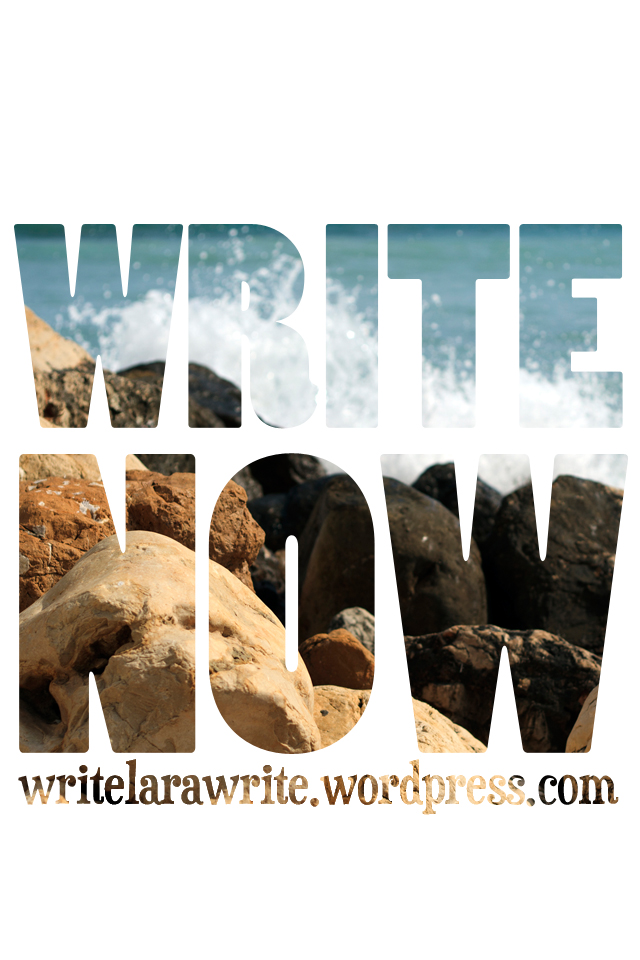
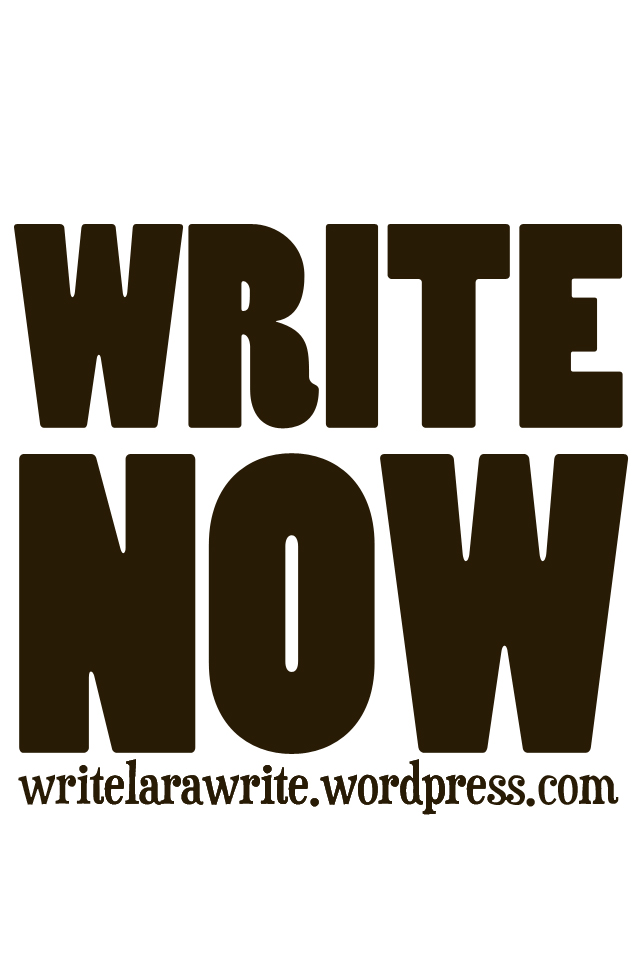
Last week I asked if you wanted any other sizes for the “Write Now” posters. Here’s the template for 960×640 resolutions (iPhone). Right click the button below and “save as.” Remember, it’s all white, so it might look invisible if you click the button. Place over the image of your choice.

Here’s an image I created using the template above, as well as a black version. Download either for your phone home screen as a constant reminder.
Back to regular programming

I hope you’ve thought about what kind of music you listen to whilst writing, for now is the time to share! Here’s how you’ll do it:

What’s your playlist? The playlist you listen to while writing, or any list of songs that get you to write. Describe the mood of the playlist

What’s your genre? The genre you write most frequently, or the genre you are currently writing under. If you write straight up fiction, include the mood. How serious or goofy is your work?

What’s your theme song? This is the theme song for your WIP. It’s the song that would be in the trailer head up the soundtrack of the film version.

Leave a comment with your answers. You can add links if you’d like. I monitor my comments, so I’ll do my part to exterminate any spam.

Pssst…If you’re a writer blogger person, feel free to ask your readers the same questions on your blog, but please link back to this post so that my readers can read your post, too! Everybody gets more playlists that way 🙂

Answers de Lara

Mix: If my love life were made into a movie, Love Music would be the soundtrack. It’s a musical bildungsroman, covering little girl romance to married life. Most of the songs are by indie artists, so there’s a bit of whimsy or fantasy to them.

Genre: My current WIP is a time-traveling historical fantasy. I like to refer to it as “mainstream fantasy” because it’s historical fiction with elements of fantasy and science fiction. Like the playlist above, it’s fun and whimsical. The second book in the series has some more action and sci-fi elements to it. I’ll probably listen to the TRON soundtrack while writing that one.

Theme song: The theme song for my current work would be the oldie-but-goodie “Starlight” by Muse. Video is below, with a low picture quality, unfortunately. [Rated G]*

Want to know the videos I used in today’s image? Here you go. I can’t stop listening to these songs.

“We Are Young” by Fun. [PG—V]*

“Blue Jeans” by Lana Del Rey [PG-13—S,V]*

“Somebody That I Used to Know” by Gotye [PG—N]*

*Note: As a courtesy for my readers, sometimes I’ll include “ratings” for external links. This includes an age rating [G, PG, PG-13, R] and codes for profane language [L], violence [V], nudity [N], or sexual themes [S]. You don’t need to rate any links in your comments, but please let us know if any music or videos you link to are NFSW (not safe for work).

Write now.

The 8 C’s of Plotting: Worksheets

8C-worksheet

If you haven’t read Part One, the introduction to the 8 C’s, read it here!

Use these worksheets to:

  • plan out the main plot skeleton of a novel
  • reduce a complex novel into one, overarching plot
  • understand the main plot of your novel, all the better to pitch with
  • get an idea of what to put in your synopsis
  • recognize how virtually all movies and novels use a similar structure
    • (and how each modifies the structure to fit its own needs)
  • make your other writer friends jealous of how organized you are

Do not use these worksheets to:

  • make money publishing or reposting my work
  • create your own blog post on the 8 C’s without linking back here
  • make paper airplanes (unless you recycle, of course)

Continue reading

Diction: Latinate versus Anglo-Saxon

Here for a school assignment? Click here for citations you can use. Best of luck!

Diction = word choice

Synonym = a word’s twin in meaning, e.g. “big” and “large” are synonyms.

Ever wonder why English has so many synonyms? Because it’s the lovechild of Germanic and French languages. (French isn’t called a romance language for no reason.) While having so many choices can be a wonderful thing, it can also be disastrous. With great vocabulary comes great responsibility. I’m talking to you, Christopher Paolini. Step away from the thesaurus.

You’ll notice the language split when two political candidates start campaigning and one plays the “smarter than thou” card and the other plays the “average Joe” card. Smarter-than-thou is going to try to dazzle you with an academic, million-dollar vocabulary. Average Joe is going to give you a pat on the back with neighbor-speak. Go back in time and see the difference between John Kerry and George W. Bush—two polar opposites in terms of diction.

See my post on dialogue at The Better Novel Project for an example of diction in The Hunger Games. Can you guess which quote belongs to which character?

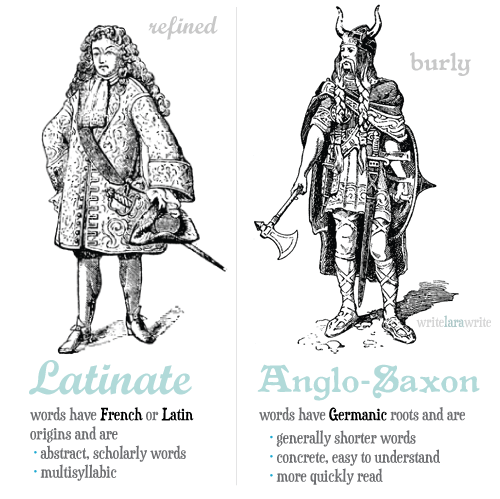
Latinate words are sometimes also known as “purple language,” “flowery” or “five-dollar” words. These are the ones that hike up your reading level and slow down your audience. While they are pretty standard in academic works, nonfiction and romance, multisyllabic Latinate words are best used in moderation. If a reader doesn’t understand your words, your words are meaningless (to them). Jargon tends to be Latinate.

But Latinate words are also ones to spend time with. They are contemplative. They can be romantic.

Generally speaking, Anglo-Saxon words come from Germanic roots (i.e. Old English, German, and Old Norse) and are common words. They are shorter and simpler than Latinate words. Action, Adventure, and Thriller genres will use more of these because they read faster, quickening the pace and heightening the suspense. This, writers, is the kind of vocabulary you want to have your word babies with during those intense scenes.

Latinate words slow down the pace, so save them for when the action is over and the characters and readers have a moment to think.

There’s nothing wrong with Latinate words. Literary works tend to favor them, and commercial works can sometimes use more of them. Middle grade writers often use Latinate diction to introduce new words to vocabulary-voracious children.

Balance is best!

Writing picture books, humor, or commercial fiction? Use more Anglo-Saxon words than Latinate.

Has someone told you that your voice sounds “too MG” or “too YA” when you’re writing for an older audience? Try adding in more Latinate words, but keep the majority to two or three syllables, sprinkling four-syllable and longer words in less frequently.

Want a list of examples of Anglo-Saxon words and Latinate words? Wikipedia saves the day.

Watch and listen to Latinate diction from Ferris Bueller’s Day Off and a mix of Latinate and Anglo-Saxon diction from The Dead Poets Society.

More resources that I found after Googling the subject:

Additional resource:

5-Minute Writing Exercise

Write down a list of 5–10 adjectives describing yourself or your protagonist. Look them up in the dictionary and see if they are based on Latin/French roots or Germanic (or Old English) roots. Then come up with a syllable for each word that comes from the other family.

For example, “masculine” is Latinate. “Burly” is Old English.

Have fun! Share here if you’d like.

Related Exercise: Analyzing diction in your favorite speech, short story, or poem

Citations

MLA:

Willard, Lara. “Diction: Latinate versus Anglo-Saxon.” Lara Willard, 21 Mar. 2012, larawillard.com/diction-latinate-versus-anglo-saxon/.

APA:

Willard, L. (2012, March 21). Diction: Latinate versus Anglo-Saxon [Blog post]. Retrieved from /diction-latinate-versus-anglo-saxon/

Chicago (Footnote):

Lara Willard, “Diction: Latinate versus Anglo-Saxon,” Lara Willard (blog), March 21, 2012, /diction-latinate-versus-anglo-saxon/.

The 8 C’s of Plotting: Introduction

Fiction Posts

Plotting Methods

There are plenty of methods to plotting out a novel or script. You’re probably most familiar with Freytag’s Pyramid: exposition, rising action, climax, falling action, and conclusion. That’s the one I was taught in school. I’d always get confused about the climax, though. The “turning point” or the “point of no return” is how it has been described to me. But is the climax an emotional one, the point at which the protagonist is at his best or happiest? Is it the point at which the protagonist defeats the antagonist? Is it the point at which the protagonist has everything she needs to defeat the antagonist? Maybe I’m the only one who had this confusion.

The 3-Act structure is adhered to in virtually any screenplay.

There’s Donna MacMeans’ W-plot, which charts the emotional journey of the protagonist.

And recently I came across two plotting techniques by Jim Smith in The Writer’s Little Helper, the Tragedy vs. Triumph method and the Ten Scenes method. (If you can grab a copy of that book, buy it.)

Five different methods. And crazy me decided to combine them all into one MOTHER method. It’s called the 8 C’s to plotting, and I hope that it will help some of you writers out there. Today I’ll post the overview, next week I’ll give you printable worksheets, and the weeks following I’ll go into more depth with each C.

Plot Chart

The 8 C’s of Plotting: Overview

Think of the 8 C’s as less of a formula and more of a structure for building upon or adapting. The 8 C’s apply to the protagonist’s main storyline, not all of the other storylines, and though all eight usually occur in the same order, the length between them, and the extremity of them will vary among works. Still, I have found in my sampling of plots of novels and films that each has every one of the 8 C’s.

The horizontal line is a line of normalcy. An upwards direction denotes progress. Downward equals crisis.

Plot Chart: the beginning

Prologue—Optional content for the story either placed in the first chapter or (possibly skipped by the reader) in the “Prologue.”

(C1) Captivation—Whatever hooks the reader, making him or her want to keep reading. Occurs within first 5 pages.

Opening—Hint: Make the Status Quo interesting by giving the Hero rooting interests and an unfulfilled desire.

(C2) Change—The inciting incident that starts the story. Life will never be the same. Occurs in the first 10%.

Reaction—The Hero refuses to act or makes unsuccessful plans.

(C3) Complication/Campaign—This forces the hero to act or change plans. Ends Act One, usually 25%.

Preparation and Problems—The Hero learns skills and acquires both allies and enemies. Several small problems occur and are overcome. This is the longest stretch of the book and may include backstory.

Plot Chart: the middle

(C4) Confrontation—The Hero succeeds against the Antagonist in a small victory.

Elation—The moment of greatest confidence. The midpoint or turning point, at 50%, usually happens either in a moment of reflection here (an internal decision) or during the Collapse (an external impact).

(C5) Collapse—The hero receives a near-fatal blow and plunges into…

Gloom—It can’t get any worse than this (though sometimes it does).

(C6) Comprehension—The awakening. When all hope seems to be lost, the Hero learns new information, regains consciousness, or gets help from someone or -thing. Ends Act Two.

Action—The Hero gets up and fights back with new vigor.

(C7) Curveball—The Hero must overcome an unexpected obstacle.

Final Battle/Final Exam—The climactic scene: a final face-off between the Hero and antagonist, or when the Hero has to prove the theme or how much they’ve grown as a character.

(C8) Culmination—The climactic moment. The Hero defeats the antagonist victoriously. (In Tragedy, the Hero dies.)

Resolution—What happens after the climactic moment; the new normal. (Optional in short fiction, but expected in all fiction)

Epilogue—Extra information to satisfy curiosity about characters or tie up loose ends. (Optional)

Click here for Part 2 & a Printable Worksheet!

Did you find this information useful?

  • Please share on social media! ❤
  • Consider subscribing to StoryCadet, my online portal for writing workshops. I offer courses in drafting, revision, and pitching/querying. By subscribing, you’ll be notified when courses will be offered.
  • If you’d like to book me for editing services, find my prices and offers on my editing site.