The great thing about blogging is that you can’t hear my maniacal laughter. Oh, I’ll give you ten steps all right. Just don’t think that those ten steps will be easy or even consecutive. Think of it more as a twisted game of Chutes and Ladders. You go up a few steps, slide back down to the bottom, go up a few more steps, slide back to the bottom again. You’re basically Sisyphus.

A nicer title for this article might be:
The Creative Process for Writing a Novel
except it also includes processes that are critical, not creative, so maybe:
The Ten-Step Program for Novelists
(Titles aren’t really my thing.)
If you follow me on Facebook, you might have seen a link I posted a while ago entitled “Madman, Architect, Carpenter, Judge: Unlocking Our Personas to Get Unstuck” from Ed Batista. In it, he quotes Betty Sue Flowers and her approach for getting unstuck as a writer. Now, I’ve already posted on The Myth of Writer’s Block, but there’s a difference between being “blocked” and being paralyzed by your inner critic.
Flowers’ essay is short, and you should read it. But I’ll sum it up for you anyway. She says that we all have conflicting energies. One, the madman, is the creative energy.
The judge is the critical energy: the internal editor, the voice that says, “That was the worst thing I’ve ever read” or “You are a ridiculous hack.” It’s the impetus to hold down the delete key.
So Flowers introduces two more personas, ones to act as mediators between the madman and the judge: the architect and the carpenter.
Basically these four personas represent 1) creativity, 2) logic, 3) craft, and 4) perfection. Separating these processes and letting them each have their turn will allow your work to grow and be refined from start to finish. You can even select one day for each persona. Monday = Madman. Tuesday I’ll organize his mess. Wednesday I work on syntax, style. Thursday I polish. Friday I submit the work.
Sounds really smart, right? It is!
But let’s look at the broader picture. How can we apply those four personas to writing out a novel-length work?
Steps 1–2: Experience

Source: Hey Kids, Comics!
#1: Feed your creativity.
Read good stories. Read like a writer. Watch movies known for their storytelling (See this and this for ideas). Watch Sherlock. Listen to people talking. Eavesdrop. People watch. Go make memories. Travel. Spend time outside.
#2: Feed your knowledge.
Research. Spend time world-building. Flesh out your characters, then get to know them inside and out. Need character worksheets or exercises? I’ve got them here.
This is where many creative people stop. But to actually get things finished, you’ll need to keep moving forward.
On to the next step!
Steps 3–4: Produce
This is where the madman comes in.
Source: Fanpop
#3: Brainstorm
No idea is off limits. Try to come up with some themes, pitches, or log lines so you have a bit of direction for the next step.
#4: Create
Be wild, reckless. Imagine your inner critic bound and gagged in the corner. Unleash your inner child and play. Write a paragraph or a scene. If you are a pantser, you might even complete a first draft before the next step. Just get words down.
When you are ready to plan, whether you’ve written a sentence or a full first draft, move on.
Step #5: Plan
5–6 correspond to the Architect.

Source: National Archive
Plan. Plot.
Start sketching out a roadmap. You can drive with your headlights out, sure, but it’s good to have at least some idea of a destination or what’s coming up next. This plan can be as rough or as detailed as you want it to be. Just stay flexible. Related posts:
- Chapter Outlining Like a Pantser
- Letters from Anne Lamott
- The 8 C’s of Plotting Novels
- The Simplest Story Structure
Repeat 1-5 until you have an idea of a destination and a route to get there.
Step #6: Harvest

Source: Smashing Picture
Curate. Organize.
Gather what you’ve generated. Organize it. Be selective with what you keep. Cut, rearrange, paste.
Repeat 1-6 until you have a complete manuscript. Celebrate. Then take a break to read a book or two about writing. Spend some time here on the blog. Ask questions.
Step #7: Critique
7–8 correspond to the Carpenter

Source: National Galleries Scotland
NOW is the time to start critiquing. Look for lazy writing. Find cliches. Read out loud. Underline wordy or clunky writing. Use a highlighter, not a pen. This is a time to find problems, not fix them. If you try to fix everything now, you’ll overwhelm yourself!
Take a break. Read poetry, go for a walk, go on vacation. Give your ego some time to recover. Compile a list of people who might want to Beta Read for you.
Step #8: Progress
Refine: Library of Congress
8a: Rewrite
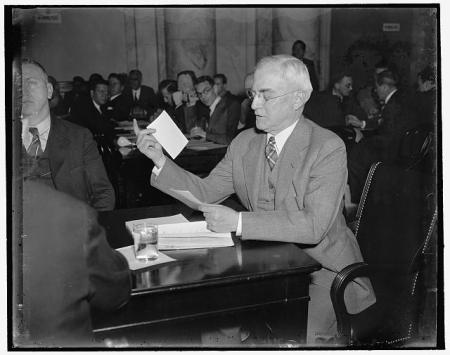
Take a scene or a chapter at a time. Look over critiques, then fix them. Be a writer. Be creative, be original. Fresh language. Specific details. Show, don’t tell.
8b: Proof
Inspect your writing for grammatical or logical errors. You can do this at the same time as #8a, but realize that one is about creating, and one is about judging. They are like twins with different personalities. You can take them as a set or separately.

Twins: Design for Mankind
Write, critique, refine, proof your query letter if you’re looking for agent representation.
Step #9: Invite

Source: Australian War Memorial
Give your new draft to other readers. Listen to their feedback. Decide if you agree with them.
While you’re waiting for their feedback, read QueryShark. Refine your query letter.
Repeat 8 and 9 until you feel ready to submit or send your work to a professional. Note that if you already have an agent or editor, you’d likely submit your work to them very early on.
Step #10: Post

Source: Smithsonian Apparently people mailed actual children via post. Seriously.
10a: Hire
Send your query letter and sample to a freelance editor for professional feedback. Alternatively, you could send your query to a critique group or published author friend. Consider anyone’s feedback critically, but also understand that sometimes your gut reaction is more of a defense mechanism. Don’t accept or reject changes without considering each one.
If self-publishing, you take on the financial risks of publishing rather than a publishing house or small press. Ideally you will hire at least one copy editor or line editor and one proofreader. I’ve seen multiple editors and proofreaders still miss typos!
Repeat 8.
10b: Query
If you are looking for representation, send your query letter to agents.
If no one requests a complete manuscript, repeat 8-10 until somebody does. A published writer is a writer who doesn’t give up.
Nobody promised you a rose garden. This is a long, hard road. You will sacrifice much. But at the end, you will have learned and achieved much.
Then: Representation!
You did it! Plan on plenty more writing, rewriting, and marketing in the months and years following representation as your agent submits your book to publishers.
Summary:
- Feed your creativity by experiencing life.
- Feed your knowledge gaining experience. Research facts. Fabricate the rest.
- Brainstorm like a mad scientist.
- Create with wild abandon. Repeat 1–4.
- Plan. Repeat 1–5 until you have a destination, an ending, a THEME.
- Curate, cut, and paste. Repeat 1–6 until you have a complete manuscript.
- NOW you can take the gag out of your internal editor’s mouth. Critique. Then take a vacation.
- Refine, fix, rewrite. Unleash the literary genius. Live up to your potential.
- Invite others to read your new draft. Welcome feedback. Write your query and summary. Repeat 8.
- Send your stuff to the professionals. Repeat 8–10 until you get representation.
An even briefer summary:
——————-
Note: My husband, a Captain in the Marine Corps (now Reserves), says he only needs 6 steps to accomplish anything: BAMCIS. I can see that being adapted for novel writing. Once he finishes a novel, I’ll let him write a guest post about it.