Time Management (& Printable 2015-2016 Quarterly Calendar)

One of my goals for October is to get more organized and be better at time management. The problem with being a work-at-home mom is that I’m always working and I’m always a mom! I’m all for being holistic, but nobody should be working all the time!

I’ll start with my calendar management, and then I’ll share the app I use to schedule my days.

Calendar Management

I took a class at my university called Writing for Organizations, and during that, I was taught how to use Gantt Charts to map out projects. I’m a visual person, so I really enjoyed it. But I haven’t applied that chart since! I created a template in Excel so that I can start using it to plan out individual months.

gantt chart

Download the Excel Template

I also created a quarterly calendar, originally for our family so we could see the whole year at a glance, but then I decided it would work really well for planning out my projects, too. In fact, you could use highlighters to create Gantt Charts on your calendar.

FIND THE 2018 PRINTABLE QUARTERLY CALENDAR HERE


Day Management

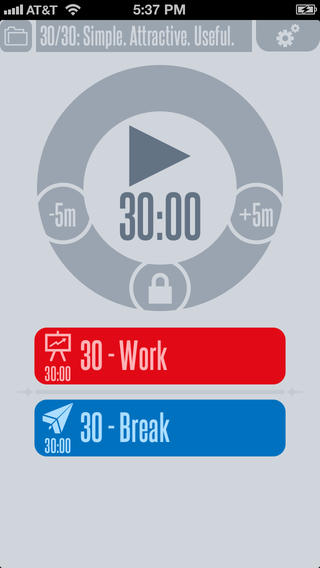
First I downloaded a Pomodoro app. The Pomodoro Technique is to set a timer for 25 minutes, work that entire time, take a 5-minute break, and then repeat two more times. After three or four “pomodoros” you get a longer break.

I picked 30/30 because I liked the graphics and the ability to color code.

30-30

You can modify your ratios between work and break. I generally split the hours up this way: 40 minutes doing something I like (like editing). 5-minute break, 10 minutes doing something I dread (like answering emails or doing dishes), and another 5-minute break.

I also schedule in leisure time, food prep, and play time with my kids. Having the day mapped out with this app helps me to see that I DO have time for everything. 30/30 is especially recommended for people with ADD/ADHD.

Motivation

If you’re struggling with motivation, I recommend the Coach.Me app. You can also try Habitica for an RPG-inspired app.


What are your favorite methods for time management? Share in the comments.

Guest Post: Watch Word List

Note from Lara—I’ve invited Lana Wood Johnson to share her list of “watch words” with my readers. These are commonly overused words she looks for while revising. If you’d like to propose a guest post, please fill out my submission form. I’m going to jump in and make a couple of comments within Lana’s article. Anything coming from me will be in italics and be bracketed, [like this].

Lana’s Watch Words

When I finished my first manuscript and started my first round of revisions, I was genuinely lost for how to proceed. I read the MS through, made the fixes I could see, then sent it off to all my well-meaning friends for a Beta round.

I assumed my Betas would cover my story structure feedback, so I plunged into Google to research how one copyedits. I went to school on the thousands of ways other people have said I should revise. I also joined Twitter around that time.

As someone who develops processes and fixes problems for a dayjob, I started noticing trends. The advice for copyedits fell into two very basic camps: words the author overuses and words editors just hate to see.

So I sat down and created what I call my Watch Word list.

watch list 1 – My Specific Words

Every author has them, the specific words that they fall back on. Turns of phrase they don’t realize they’re throwing in everywhere or a body part they’re overly fond of referencing. [I call these “pet words” or “pet phrases”]

Mine is eyes. I had one CP ask if I was obsessed.

I also found myself using the word “instead” a lot more than I needed to.

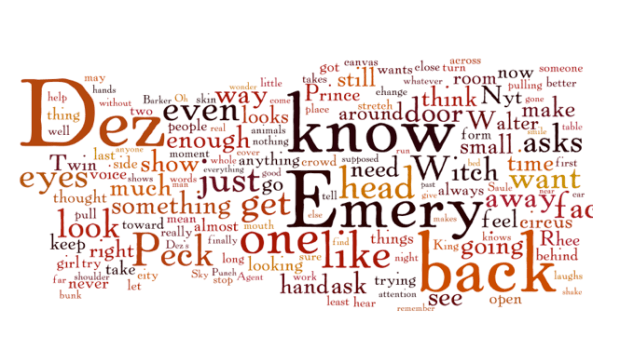
Thus, when I went through my second heavy round of revision, I had the brilliant idea of trying to put my whole MS into a word cloud.

Wordle fit all my needs. It’s cloud based. It’s free. It does a fabulous job of removing the “standard” English words like I, the, and, etc. It doesn’t store anything on their servers.

Running the MS through their Java leaves me with the words that appear more in my writing than in standard English. They’re bright, clear, and right in front of me in a way that cannot be denied.

Figure 1 – Word Cloud for my First MS NECESSITY

wc1

Figure 2 – Word Cloud for my Latest WIP CLANDESTINE MENAGERIEwc2

The first thing I notice are the names of my primary characters. They should be large—I use them a ton. But there are other words that probably don’t need to be quite that large. In my case, it’s the word ‘know’. Because, my characters just know things, I guess.

But, if you compare my two clouds, you’ll see that the different MSs have different watchwords. The first is Contemporary Fantasy, the second is High Fantasy. NECESSITY was the first book I ever finished. CLANDESTINE MENAGERIE started after I’d figured out that I overused “look” and “eyes”.

The words placed on the list for NECESSITY were: know, look, eyes, like, think, and one.

The words added from CLANDESTINE MENAGERIE were: back and head.

2 – Editor’s Peeves

I know going in that I can’t write the way every editor wants me to write; I won’t even try. But there are some words they hate that make sense:

  • Mark Twain’s quote about “very” comes to mind.
  • The memory of my 10th Grade English Teacher’s ranting about “like.”
  • Every author’s personal war against the word “that.”
  • The constant exhortations we hear to eliminate all adverbs. [everything is fine in moderation!]
  • An amazing panel at CONvergence where a group of authors taught me that the less you use “and,” the stronger your writing will be. [I’ve never heard this one—I wonder if they were referring to parataxis, one of my favorite literary devices.]

I decided to add some of their words: the ones I noticed in my own writing, the ones that resonated with me, the ones that reflected the kind of writing I wanted to do.

Some I use more than others.

Some I use less but want to watch for anyway.

How I Use the List

Ok, so, great, it’s a list. Obviously I’m not going to improve all my writing just by knowing it’s there and these are the words on it. It’s a long list—I can’t keep them all in my head. So when I do a major revision, this is my process.

First, I load the manuscript onto my Kindle which allows me to treat it exactly like a regular book. I forbid myself from editing at all as I re-read the entire story. The most I let myself do is highlight a particularly bad section. As I read, I find myself getting lost in the story, and that’s great! I end up falling back in love with my characters and my story. I learn to trust myself and my writing. But I also start seeing whatever my CPs were trying to tell me in their feedback.

When I’m done with my re-read, I do my heavy lifting revision: swap out scenes, revise dialogue, eliminate characters. It’s basically drafting all over again, which introduces new errors.

Here’s where the watch words come in. After drafting, I do what I call a Language Pass. This is where I search each word individually and revise only their sentences.

BUT!

Here’s the key of the whole Watch Words list! I ONLY revise these words in the Narrative. Dialogue is a separate. My modern high school teens get to say “really” and “just” as much as they feel like in their conversations.

I also don’t take out every single instance of these words. I evaluate each sentence. I’m looking for how many times I’ve used the same word in the same page, scene, chapter, and/or story. This list doesn’t work for find and replace. It’s meant to help me evaluate the strength of my prose.

My final step is another read-through, but this is more for grammar and language. I read the whole thing aloud. Doing this helps me evaluate the dialogue. This is where I confirm the grammar as I understand it and re-fix the sentences I totally messed up by removing one of my watch words.

In the end, the list is not a be-all, end-all. You will not read my stories and find I’ve eliminated all the words from my list. My hope is that you barely notice them. Because the entire purpose of this list, of writing, of language in general, is that the individual words become invisible and the story is what remains the focus.

The List

[Note: look for different forms of the words below. Tense (past, present, perfect, progressive) and person (first, second, third) will affect the word endings. The most common variations are -ing, -s, and -ed suffixes.]

-ly
A lot
Again
Almost
And
Back
Be/Is/Had/Has/Was/Were/Would
Began/Begin [“Begin to” and “start to” tend to be unnecessarily wordy—cut]
Eyes
Feel/Felt
Glance
Going
Head
Hear
Instead
Just [See also “even” and “so” for overused adverbs many authors miss]
Know
Like
Look
Of Course
Of them
One
Over
Really
Saw/See
Seem
Sit down/Sat down
Smile
Start
Stood up/Stand up
That
Then
Think/Thought
Toward
Try/Tried
Turn
Very
Which

[To see my (Lara’s) additions to this list, see Overused Words You Should and Shouldn’t Delete]

About Lana

Lana Wood Johnson lives in Min­nesota with her too-perfect hus­band and their two less-than-perfect Eng­lish Bull­dogs. She writes young adult fantasy novels, watches an excessive amount of Korean dramas, and consults on business processes to keep out of trouble. Find her on Twitter @muliebris

lanawoodjohnson

Becoming a Fan Favorite: Writing Description and Direction

In today’s post, I talk about stage directions in fiction, writing natural descriptions, why some books are constantly reread by readers, and, to an extent, immortality.

Orderly Description

Ever played that “blind drawing” party game? You close your eyes or put a piece of paper on your head and someone gives you direction upon direction to cram into one picture?

Here’s an example for the party planning website Sophie’s World (which, consequently, is the title of one of my favorite books):

“I’d like you to draw the outline of a house. Just a simple little house, right in the middle of the page… Now, beside the house I’d like you to add a tree, a medium sized tree, not too big, not too small… Oh, I forgot! You need a front door on your house. Please draw a front door so that the people can come in and out easily… Oh, did I tell you there are apples in your tree? Draw a few apples, maybe 5 or 6, in your tree now… And don’t forget the windows in the house! I think two would be nice… Did I remind you to draw a chimney? Let’s put a chimney on the house, with some smoke coming out the top… Oh, and look! There’s a dog in the yard… And a picket fence… And of course there’s a family…”

This is the kind of experience a reader has when you describe something in an unnatural order:

blind drawing
It’s also what it’s like when description is given out of order. When describing a scene, consider camera shots.

Zoom in from broad descriptions, ending on one specific detail. Or zoom out, starting on a detail and working your way out to observing the whole. Pan in one direction. Going in an unnatural order gives the nauseating effect of “shaky cam.”

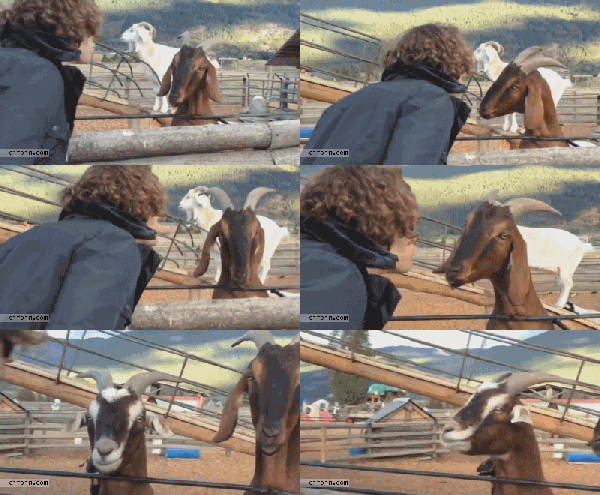
Adding details too late, after the reader has already created the image in his or her mind, gives what I like to call the “awkward goat” effect.

Writer: “I went to give the goat a kiss. Then the other goat—”
Reader: “Wait, there’s another goat?”
Goat: “SURPRISE! I’ve been here the whole time!” (maniacal goat bleating)

surprise-goat
While this is used effectively in visual comedy, redirection doesn’t really work in fiction.

Overcomplicated Stage Directions

Another problem of ineffective description is overcomplicated stage directions. I see sentences like this all the time in unpublished manuscripts:

“Come with me,” Jorge said and turned around while kissing my hand as we ran away together.

Though these are most often found in dialogue tags, I see overcomplicated stage directions all over. That sentence above is just one I made up, but let’s rewrite it so it doesn’t seem like “he” is doing a hundred things at once.

First, find the perps: “and,” “as,” and “while.” The two latter words can often be cut in stage directions. The former is a fine word that sometimes gets overused. Let’s focus on no more than two actions at once.

Said + turned, kissing + ran

“Come with me,” he said, turning around. He kissed my hand, inviting me to run away with him.

Let’s also apply what we just learned about orderly directions, and cut the unnecessary dialogue tag.

Jorge turned around. “Come with me.” He kissed my hand, inviting me to run away with him.

What did I just do? I took advantage of my friend the progressive verb.

A progressive verb is a verb ending in -ing. That ending tells us that the -ing verb is happening while something else is going on, while letting us cut the “while” or “as.”

“While” and “as” aren’t bad words. It’s not about the word, it’s how you use it. By all means, use “as” to make a simile (e.g., “as [adjective] as a [noun]”). “While” is an innocent preposition until proven guilty. The problem is using them to show more than one thing happening concurrently. Show me a manuscript which uses “while” or “as” in the first page in stage directions, and there’s a big chance that same construction will keep showing up over the next ten pages.

Doing a find/replace search for all instances of “as I,” “as we,” “as she,” “as he”  (depending on your POV), repeating the search with “while,” will help you see if you’re going overboard. Also be on the look-out for “then” and “before,” more signs of wordiness and or disorderly directions.

Use them a few times, and that’s fine. Do it a few times per page—or worse, per paragraph—and you’re just being unnecessarily wordy. Gone are the days when novelists are paid by the word.

The Divine Detail

Remember, your novel has to compete with online, in-demand television and movies. You need to keep your reader’s attention. That doesn’t mean your novel needs explosions or murders every other chapter; it means your prose needs to be immediate and precise rather than longwinded and wordy. You want to be Robin Williams giving his Seize the Day speech, not Ben Stein droning about economics. The difference isn’t just subject, it’s diction. Do diction right, and you’ll engage readers that otherwise don’t care one iota about your subject. That is, until they start reading your book.

When describing, choose one or two vivid details, referred to by editors as “divine details” that can set the scene or characterize, and let the reader fill in the rest of the image. Compare the chaos of the drawing above (ain’t I an artiste?) with expansion drawings done by children:

expand-drawing

Image via ArtMommie. Click for more images.

When the reader is allowed to contribute, your work takes on a new form. It evolves in the readers’ individual minds. It’s a spark which they build upon to create a conflagration.

Letting the Reader In

It doesn’t matter how brilliant of a writer you are—writing and reading are collaborative efforts, and that collaborative effort will bring more life and beauty to your work than you could hope to do by yourself.

Sometimes we write because we’re control freaks. We are the masters of the universe, and we will plot and plan and tell our characters exactly what they should do. But when we let our characters breathe and give them freedom, when we let the reader have some creative liberty, our work takes on a life of its own.

Maybe that’s a cliche, but if you want your work to live on after you’re gone, you need to let your reader experience your world naturally. You need to let them read between the lines and contribute to the meaning and world of your fiction. When you let them participate, readers will not only want to buy your books, they will want to reread your books over and over again, letting them become part of their life, seeing how their interpretations change over the years.

Still from cafeteria scene in film NEVER BEEN KISSED, of protagonist Julia dressed in outrageous clothes, wondering with whom she should sit at lunch.

Literary? Mainstream? Commercial? What Genre Is This Anyway?

What’s the difference between commercial and literary and mainstream fiction? What do those words mean, anyway? What about “upmarket”? Where does my book fit in?

Sometimes it’s really obvious where your novel fits in with others.

Other times, you show up querying your book and have no idea where to put it. It’s awkwardly similar to high school (at least the movie version of high school). Everybody else seems so neatly sorted into groups.

A group of skater-pothead high schoolers from the film CLUELESS.

And then there’s you…

Still from cafeteria scene in film NEVER BEEN KISSED, of protagonist Julia dressed in outrageous clothes, wondering with whom she should sit at lunch.

But you want your book to find readers, which means your book needs to find something in common with other books (ones that have readers). Hey, you know which books have the most readers? Commercial fiction. Let’s start there.

Commercial Fiction

Commercial fiction is any fiction that has ONE of the following characteristics:

  • It sells a lot of copies, OR
  • It has a tight, fresh premise that’s easy to pitch (like a logline), OR
  • It has a very specific, established audience.

So genre fiction is considered commercial fiction, because genres can sell a lot of books to their target readers. Children’s books can often be considered commercial because all kids are encouraged to read, but children’s books are categorized by age first, genre second. Commercial writers are often prolific ones, churning out book after book after book for their very happy fan base, regardless of their genre.

BOTTOM LINE: Don’t call your own work “commercial fiction”—that’s a term defined by sales. Know the difference between age categories (adult, young adult, middle grade, etc.) and genres (what this post is about).

Genre Fiction

Genre fiction adheres to specific tropes. For example, if you’re writing a romance, your story must have a happily ever after. If it doesn’t, it’s not a romance.

Read heavily in your genre. What do you expect when reading that genre? That’s what readers will expect from your book if it’s put on that shelf.

Established genre families, often with their own shelves in stores or libraries:

  • Mystery
  • Romance
  • Suspense / Thriller
  • Speculative Fiction (includes fantasy, science fiction, horror)
  • Western
  • Adventure (sometimes grouped with thrillers)

Did you write speculative fiction? Read about my guide to Science Fiction and Fantasy Sub-Genres.

Cross-Genre

A cross-genre novel or story is one that borrows tropes from two or more genres. If your book is about an elf and an ogre falling in love and living happily ever after, you’re borrowing from the Romance and Fantasy families.

take-on-me

But do you call it Fantasy Romance or Romantic Fantasy? The first word in a genre pairing is the adjective qualifying the second, more prominent genre. In other words, a fantasy romance is primarily a romance with some fantasy elements. A romantic fantasy borrows more from the fantasy genre than the romance genre, but it still should have a happily ever after, or you can’t call it “romantic.”

Many stories have romantic elements. That doesn’t mean they are romances.

If your story has romantic elements, then say it’s “______ with romantic elements” if you must. But the romantic elements should be evident from your pitch.

A lot of colors have blue in them, but when we add a bit of it to yellow and mix it throughout, we call the result “green,” or maybe “yellow-green,” not “yellow with blue elements.”

BOTTOM LINE: If you think your book fits in one or more genres, look up the tropes for each genre. Read multiple authors of those genres to see where your book fits best. 

mean-girls

Your book doesn’t fit in with any of those genres? Don’t give up yet.

Mainstream or General Fiction

If your book wouldn’t sit on one of the five “shelves” listed above, it will likely be placed in a section called “General Fiction” or simply “Fiction.”

Historical fiction will likely be shelved here, along with contemporary fiction. Women’s fiction is general fiction promoted mainly to female readers. If your book is one of these genres, call it by one of those names. It’s better to be specific than vague, and it shows that you know your audience.

Mainstream fiction might appeal to a broader audience, but it can be more difficult to market. Marketers need to know where to direct their efforts.

Without a specified audience, your book will be a much harder sell.
GIF from The Princess Diaries: "My expectation in life is to be invisible, and I'm good at it."

Literary Fiction

Literary fiction has its own audience—one who has high expectations for prose and subtext.

If literary fiction gets its own shelf, that shelf is often called “literature,” though many readers are rightly annoyed at the suggestion that genre fiction can’t be considered literature. We won’t get into what constitutes a work of fiction being considered “literature” here. As far as I’m considered, that’s the same as debating the definition or worth of “art.”

What we will talk about is what constitutes literary fiction.

Elements of literary fiction:

  • The language is vivid and fresh. Frequently in literary fiction, how an element is presented is more important than what is presented. The words are like visible brushstrokes in a painting.
  • It might be more concerned with subtext, theme, or atmosphere than action.
  • It’s more likely to subvert tropes than genre fiction, which upholds tropes (to the satisfaction of its expectant readers).
  • Literary fiction is more likely to allude or respond to other forms of art, especially classical poetry and literature.
  • The structure might be experimental, playing with timelines, points of view, or different forms (incorporating poetry or illustrations or other forms of media).
  • It might be more concerned with a character’s internal struggle than external conflict.
  • It might play with what defines a “novel” or “story” or “literature” (see Metafiction)
  • It might be delivered to a select few (like the first collection from Facsimile Press, which publishes fiction only via fax).
  • Some readers might not consider it accessible because it attempts the unexpected.

Read more: Literary and Commercial Fiction as Paintings

Like “commercial,” the term “literary” is subjective and is doubted by readers when self-applied. Some readers might not agree with your label.

GIF of a man throwing a book out the window in frustration

If you’ve studied or discussed literature at length, or if your writing has been recognized or published by a literary community, then you might be fine calling your work literary. Show that you understand what literary means in a query letter by including a statement in your bio paragraph, like “I majored in literature at Such-and-Such University” or “my fiction has won [recognizable literary accolades not based on commercial genre].”

BOTTOM LINE: Err on the side of calling your work contemporary or historical (whichever fits) until an authority in the literary sphere—an agent, reviewer, award-winning author, or publisher—assigns the “Literary” qualifier to your work. 

Upmarket Fiction or “Book Club Books”

Upmarket Fiction is mainstream fiction with both literary and commercial elements. These are often books read by book clubs, because not only are the books entertaining and accessible, but they also have finely crafted prose, universal themes, or head-scratching concepts that beg to be discussed with other readers.

You can call your work upmarket, but there’s no shelf for upmarket books. “Upmarket” is an adjective. Use it paired with another genre or category label, for example, “upmarket fantasy” or “upmarket contemporary novel.”

BOTTOM LINE: Upmarket fiction is approachable, but beneath its fresh, commercial premise lie layers of subtext.

pretty-in-pink

Conclusion

When pitching your book, you need to show how it’s both different from and similar to books on the market.
From The Breakfast Club: a popular boy makes a really weird sandwich, eliciting looks from his peers.

To be a success, your book needs to fit in with others while having unique qualities of its own.

In a query letter, the main content of the pitch should show how your story is unique. The informational paragraph with word count, genre, and age category should show where it fits in. This is where you can include comp titles: books or related media that might share a specific audience with your readership. “[MY TITLE IN ALL CAPS] would appeal to fans of [two or three recently published books, still-writing authors, or related media].”

What's the difference between literary, mainstream, commercial, and upmarket fiction?Click to save on Pinterest